

What if you could transform weak, brittle tips into durable canvases for artistic expression? Acrylic enhancements have stormed back into popularity, with celebrities and social media fueling a 63% increase in salon requests since 2022. But how do these sculpted masterpieces actually work – and are they right for you?
Professional manicurist Hannah Lee explains: “Modern techniques create lightweight yet sturdy extensions that mimic natural shapes.” Unlike temporary solutions, these overlays bond securely to your nail bed while allowing endless customization. From minimalist French tips to 3D floral patterns, your creativity sets the limits.
But durability comes with responsibility. Proper maintenance prevents lifting and keeps your underlying nails healthy. We’ll show you expert-approved methods for at-home care between salon visits, plus common mistakes that shorten your manicure’s lifespan.
Key Takeaways
- Celebrity trends and social media revived demand for durable nail enhancements
- Professional application ensures proper adhesion and natural-looking results
- Custom designs thrive on the extended surface area these overlays provide
- Regular maintenance prevents damage to natural nail beds
- Specialized removal techniques protect your base nails during takeoff
Understanding Acrylic Nails
The secret behind durable, eye-catching manicures lies in a simple chemical reaction. These enhancements combine science and artistry to create customizable shapes that last weeks. Let’s break down how they work and compare to popular alternatives.
What Are They Made Of?
These overlays start as a mix of liquid monomer and polymer powder. When combined, they form a moldable paste that bonds to your natural surface. “The magic happens through polymerization,” explains manicurist Hannah Lee. “It hardens when exposed to air, creating rock-solid protection.”
Popular brands like Young Nails offer options for different needs:
- Speed formulas set in 60 seconds for quick fixes
- Core powders allow extra time for shaping
- 24+ color choices for seamless blending
How They Stack Up Against Gel
While both create beautiful results, key differences matter:
| Feature | Acrylic | Gel |
|---|---|---|
| Curing Method | Air-dries | UV light |
| Durability | 4-6 weeks | 2-3 weeks |
| Best For | Length extensions | Natural looks |
Gel offers a glossy finish but lacks the structural support for dramatic length. The air-dry process means no UV exposure, though some find the initial scent strong. For intricate 3D art or extra-long tips, professionals recommend the acrylic approach.
Mastering Acrylic Nails Application
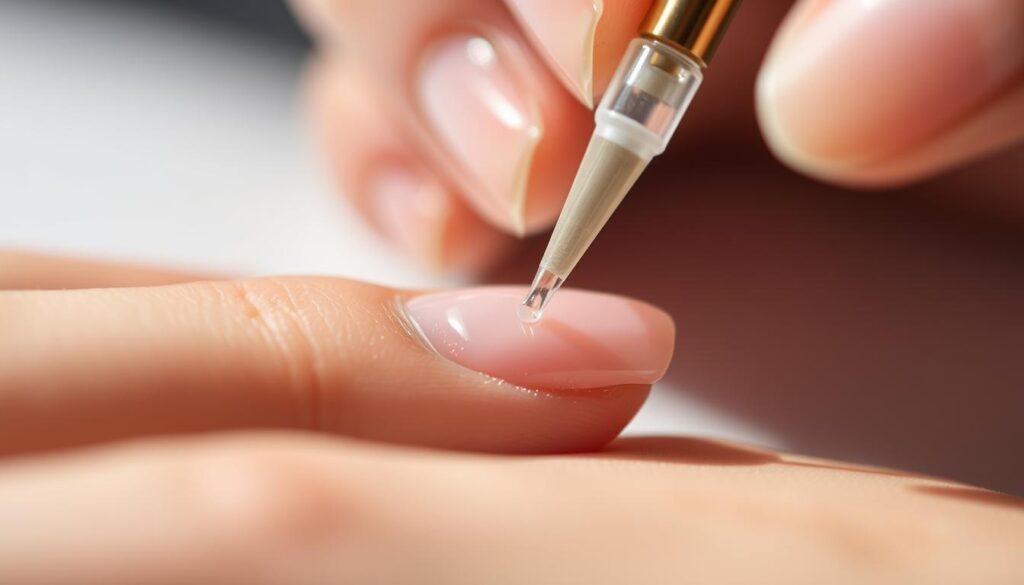
Creating stunning, long-lasting results requires precision and practice. Let’s explore techniques professionals use to achieve seamless overlays that look natural and stay put for weeks.
Preparing Your Natural Nails
Start with clean, dry hands. Gently push back cuticles using an orange stick – never cut them. Lightly buff the surface to remove shine, creating texture for better adhesion. “Skipping this step causes 80% of lifting issues,” warns nail educator Lisa Park.
The Step-by-Step Application Process
Dip your brush into liquid monomer, then press it into polymer powder to form a bead. Place this mixture near your cuticle without touching skin. Angle your finger downward as you spread the product, letting gravity help create a smooth surface. Work quickly before the mixture sets.
Key tips for success:
- Maintain 1mm space between product and cuticle
- Use three beads per nail for even coverage
- File gently after hardening using 180-grit buffer
Finishing Touches for a Salon-Quality Look
Apply base coat to prevent staining, then add your favorite colors. For trendy short pink designs, use gel polish for extra durability. Seal everything with a glossy top coat, curing under UV light if needed. Wipe away residue with alcohol for that professional shine.
Caring for and Maintaining Your Acrylic Nails
Keeping your enhancements flawless requires smart habits. Think of them like delicate jewelry – they thrive with consistent attention and the right tools.
Daily Care Rituals
Moisturize morning and night. Nail educator Hannah Lee insists: “Hydration prevents 90% of common issues.” Massage cuticle oil into your nail beds – Sally Hansen’s Vitamin E formula absorbs quickly without greasiness. Always wear gloves when washing dishes or cleaning.
Reapply top coat every 5 days. Essie’s Gel Couture formula adds shine while sealing edges. For extra protection, try Clarins’ rich hand cream before bed. These steps keep your enhancements flexible and chip-resistant.
Pro Tips for Long-Lasting Wear
Schedule fills every three weeks. This prevents lifting as your natural nails grow. Never pick at lifted edges – it damages the layers underneath. If you feel weakness, apply a thin layer of builder gel as temporary reinforcement.
Consider supplements like HUM Nutrition’s biotin blend. It strengthens your natural base while supporting new growth. When removing polish, use acetone-free formulas to maintain surface integrity.
With this routine, your manicure can outlast typical wear periods. As Lee notes: “Proper care turns six-week enhancements into ten-week masterpieces.”
Troubleshooting and Safety Considerations for Acrylic Nails
Even the most carefully applied enhancements can develop issues over time. Knowing how to address common problems helps maintain both beauty and nail health.
Preventing Lifting and Damage
Watch for gaps between your natural surface and the overlay. “Moisture trapped in lifted areas breeds bacteria,” warns expert Hannah Lee. Keep hands dry and avoid using enhancements as tools. Apply thin layers of top coat weekly to seal edges.
Safe Removal and Recovery Practices
Attempting DIY removal often leads to shredded layers. Professionals use precise filing followed by acetone wraps.
“The safest way involves 15-minute acetone soaks – rushing causes unnecessary damage.”
Post-removal, massage jojoba oil into beds daily for two weeks.
When to Seek Professional Help
Redness, swelling, or green discoloration requires immediate salon attention. Schedule fills every three weeks to prevent stress fractures. Take 6-8 week breaks between sets to let your natural base recover strength.
Proper care extends wear time while protecting your hands. Remember: quality products and expert technicians make all the difference in maintaining healthy, beautiful results.
Conclusion
You’ve unlocked the secrets to stunning, long-lasting enhancements that balance beauty with nail health. Professional application and smart care habits turn temporary trends into enduring style statements. Remember: your local salon isn’t just for initial designs – regular maintenance visits keep everything secure and polished.
Nail educator Hannah Lee shares a golden rule: “Treat enhancements like investments, not permanent fixtures.” Schedule removal every 6-8 weeks using acetone wraps, never picking at edges. This prevents hidden damage and lets your natural base breathe. Pair breaks with cuticle oils to rebuild strength between sets.
Whether choosing bold art or subtle shapes, prioritize your nail’s well-being. Bookmark this guide for quick reference on avoiding common pitfalls. With these strategies, your next manicure becomes a celebration of self-care – dazzling and responsible.