
Have you ever stared at a chipped nail, willing it to repair itself overnight? While that might not happen, understanding your body’s natural rhythms can transform your approach to nail care. The truth about keratin development hides surprising patterns – your dominant hand’s nails advance quicker, summer speeds up growth, and even your longest finger plays a role.
Most people don’t realize their nails expand roughly 3.5 millimeters monthly – about two-thirds the length of a rice grain. This means a completely regrown fingernail could take half a year. But here’s the kicker: your personal growth rate acts like a biological fingerprint, shaped by age, health, and environmental factors.
This guide reveals science-backed strategies to optimize your natural potential. You’ll learn why toenails lag behind their finger counterparts, how daytime activity stimulates growth, and which proven methods protect against brittleness. Whether you’re recovering from damage or pursuing stronger tips, these insights create realistic expectations while boosting overall nail health.
Key Takeaways
- Average monthly growth equals roughly 1/10 millimeter daily
- Dominant hand nails develop faster than others
- Complete regrowth after loss takes up to 6 months
- Summer months accelerate growth cycles
- Longer fingers typically show quicker nail development
- Daytime growth outpaces nighttime rates
Understanding Nail Growth: The Science Behind It
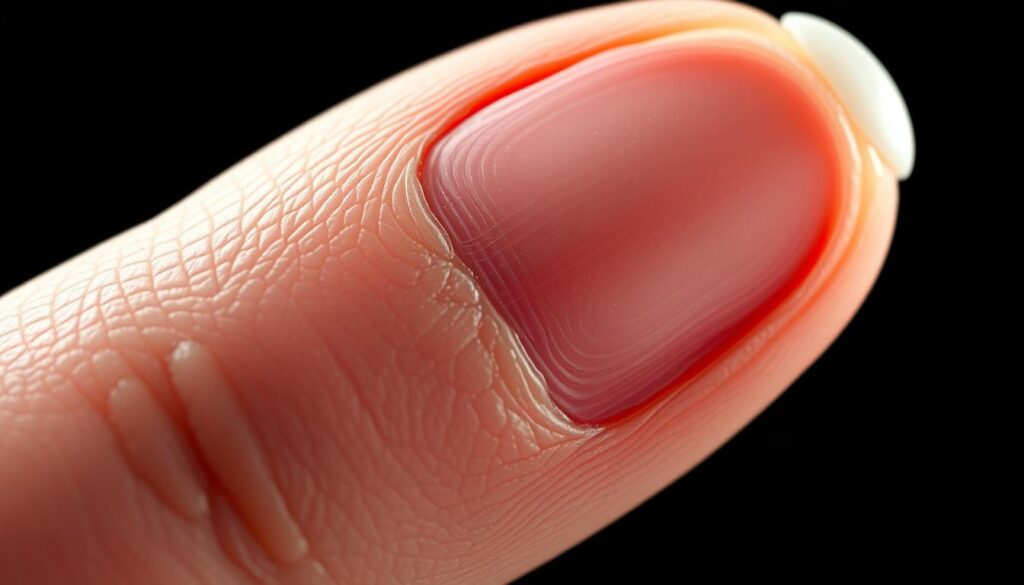
Your nails tell a biological story through their structure and growth patterns. Beneath that polished surface lies a carefully engineered system working nonstop. Let’s explore what makes your nails tick.
The Structure of Your Nails
Your nail plate – the visible part – is built from layered keratin. This protein forms a flexible shield, much like armor for your fingertips. Underneath, the nail bed acts as a life support system. It’s packed with blood vessels that feed nutrients to growing cells.
The cuticle isn’t just for manicures. This protective seal guards the nail matrix, the hidden growth engine. Damage here can warp new nail cells before they even surface.
Role of the Nail Matrix and Bed
Think of your nail matrix as a 24/7 production line. Located under the cuticle, it generates cells that harden into your nail plate. More blood flow to this area – from injury or massage – can rev up cell creation.
Your nail bed does double duty. It anchors the nail plate while delivering oxygen and vitamins. Those pink hues? They’re live maps of the tiny veins nourishing every millimeter of growth. Keep this area healthy, and your nails reflect that care.
How Fast Do Nails Grow: Unraveling the Average Rate
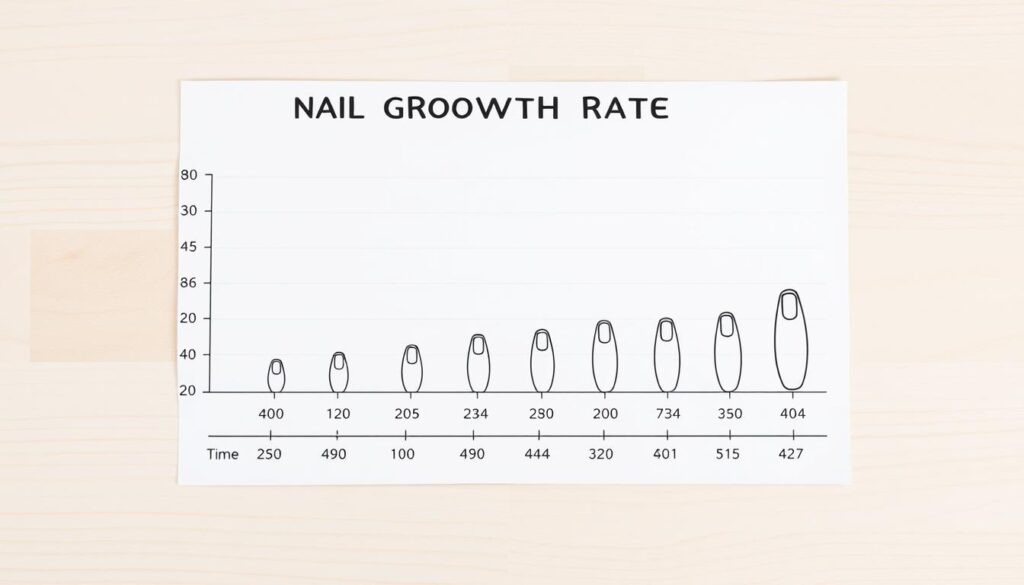
Tracking nail expansion might seem trivial, but the numbers reveal precise biological patterns. Researchers have measured these changes down to hundredths of millimeters, uncovering surprising consistencies across populations.
Daily and Monthly Growth Insights
Your fingernails add roughly 1/10 millimeter daily – equivalent to stacking 10 human hairs end-to-end each month. This steady progress totals about 3.5 millimeters monthly, matching the height of two stacked credit cards. While this rate stays remarkably consistent, your dominant hand’s nails often outpace others by 0.1-0.2 millimeters monthly.
Scientific Studies and Findings
Landmark research reveals fascinating variations:
- Dr. William Bean’s 35-year self-study showed 24% slower growth in his thumbnail between ages 23 and 67
- Little fingers lag behind other digits, growing 0.3-0.5 millimeters slower monthly
- Men’s nails typically advance 0.12 millimeters faster per month than women’s
These differences explain why your friend might need trims more often. While complete regrowth takes about six months, understanding your personal growth rate helps plan nail recovery after damage.
Key Factors Impacting Nail Growth
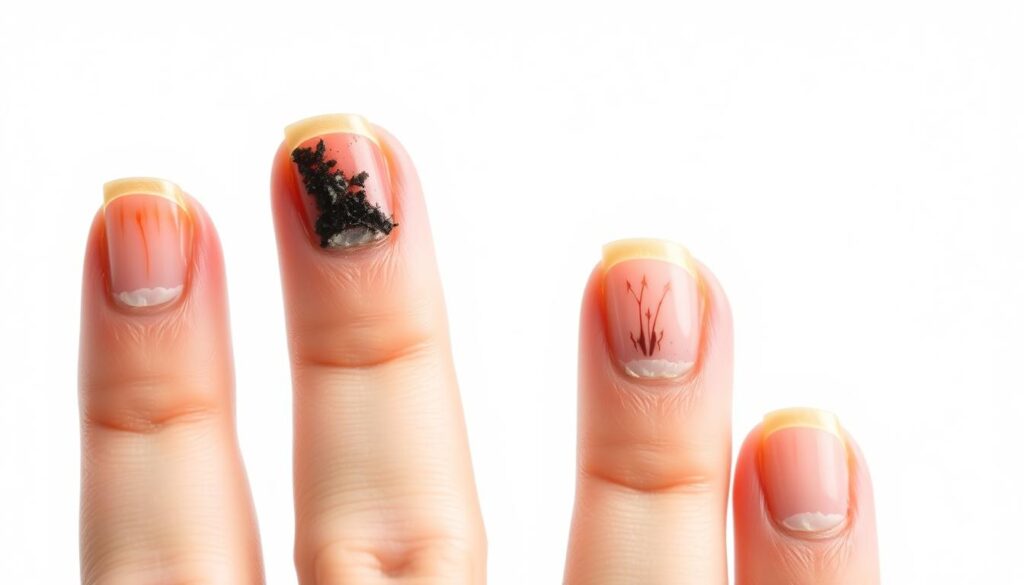
Your body’s natural rhythms influence more than just sleep cycles – they shape your keratin production too. While genetics set the baseline, environmental and biological elements fine-tune your personal growth blueprint.
Age, Hormones, and Cellular Activity
Youth gives nails a biological boost. Before 25, most people see peak keratin production thanks to strong blood flow and rapid cell turnover. Pregnancy often brings temporary surges from estrogen spikes, while menopause typically slows expansion.
Consider these life stage patterns:
| Factor | Effect | Peak Time |
|---|---|---|
| Age | +0.4mm/month faster under 25 | Puberty |
| Hormones | +22% growth during pregnancy | 2nd trimester |
| Trauma | +15% repair speed | First 72 hours |
| Season | +0.2mm summer growth | July-August |
| Health | -30% with chronic illness | N/A |
Physical Stress and Environmental Effects
Your dominant hand’s nails face more wear but grow 0.15mm faster monthly. Why? Frequent micro-traumas from typing or tool use trigger repair responses. This sends extra nutrients to damaged areas through increased blood flow.
Winter’s chill slows growth by constricting blood vessels. Conversely, warm weather improves circulation – one reason beach vacations might help your manicure last longer. Even temporary fevers can pause keratin production as energy shifts to immune defense.
Chronic conditions alter growth patterns dramatically. Thyroid issues may cause brittleness, while diabetes often leads to slower expansion. Tracking changes helps spot health shifts early.
Nail Care Routine for Optimizing Growth
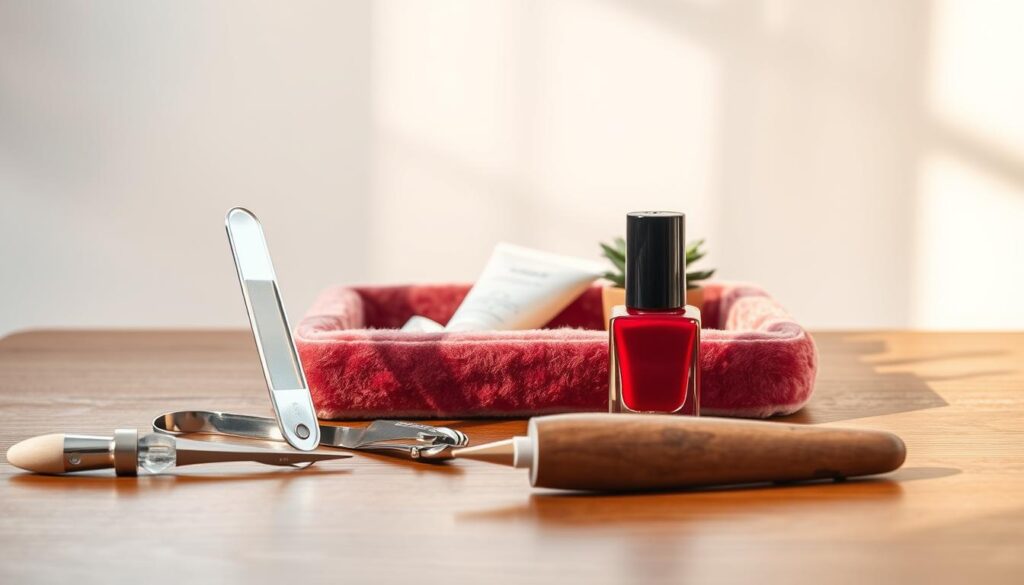
Your morning coffee ritual might need a companion – a nail care routine that works while you sip. Consistent maintenance protects your natural nail health while supporting steady development. Let’s explore practical strategies that blend science with daily habits.
Effective Grooming and Moisturizing Techniques
Start with clean, sharp clippers for weekly trims. Shape edges gently to prevent snags that lead to splits. Dryness is the enemy – rub cuticle oil into nail beds after washing hands. A 2007 study found 2.5mg daily biotin supplements reduced breakage by 25% in three months.
Don’t skip cuticle care. Push them back after showers when skin is soft. This protects the growth matrix from infections. For extra hydration, apply thick creams before bed. Your nails absorb moisture best during sleep cycles.
Choosing the Right Products
Avoid polishes listing formaldehyde or formalin. These chemicals create temporary hardness but weaken structure over time. Instead, opt for breathable base coats with vitamins. Nail hardeners work for emergencies, but limit use to two weeks monthly.
Artificial tips might boost appearance short-term, but glue damages the natural surface. If you crave length, regular clipping beats biting by maintaining edge integrity. Remember: gentle care today means stronger results tomorrow.
Fingernails Versus Toenails: Growth Differences
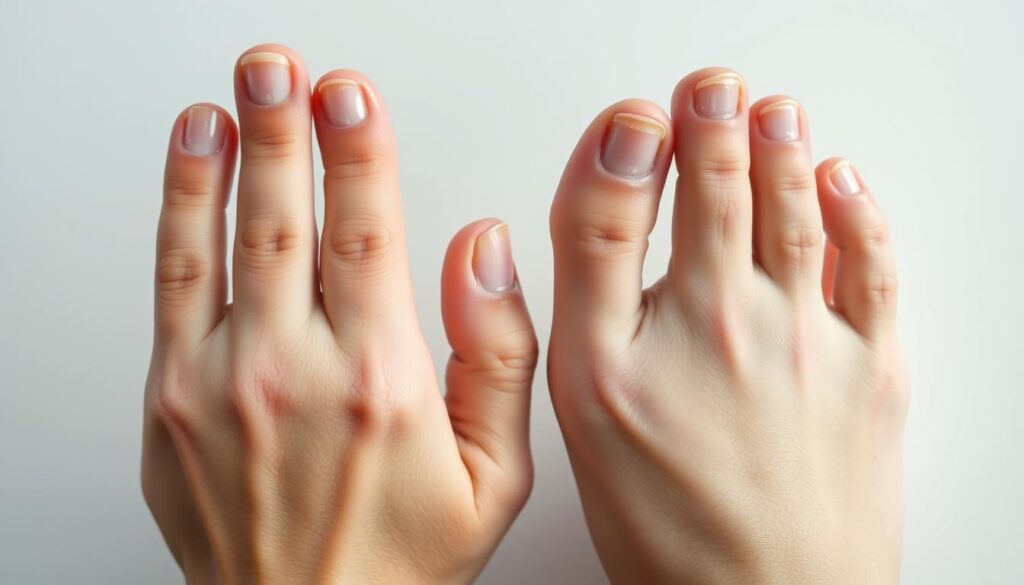
Ever notice your manicure needs refreshing twice as often as pedicure appointments? This isn’t just about aesthetics – your hands and feet operate on different biological timelines. The growth gap between fingernails and toenails reveals fascinating truths about how your body prioritizes resources.
Comparative Growth Rates and Regeneration
Fingernails sprint ahead at 3.47 millimeters monthly – nearly double toenails’ 1.62 millimeter pace. This means while your pinky nail renews itself every six months, big toenails take 12-18 months for full regrowth. Daily activity levels create this disparity through blood flow stimulation.
Your hands constantly interact with the world – typing, cooking, scratching. Each motion sends nutrient-rich blood to nail beds. Toes, tucked safely in shoes, miss out on this circulation boost. Reduced trauma means slower cellular turnover in toenail matrices.
Maintenance strategies differ too. Trim fingernails weekly to prevent snags, but toenails only need monthly attention. However, foot nails require closer monitoring for thickness or discoloration since changes develop gradually. Proper footwear prevents pressure damage that slows recovery.
Understanding these patterns helps manage expectations. Lost a thumbnail? Mark your calendar for six months of regrowth. Dealing with injured toenails? Schedule follow-up checks every quarter. Your nails’ location dictates their biological clock – work with it, not against it.
Nutrition and Lifestyle for Enhanced Nail Health
Your plate holds more power over your nails than you might think. Strong, resilient tips start with the nutrients flowing through your bloodstream. Like a garden needing fertilizer, your nail matrix thrives on specific vitamins and minerals.
Power Players: Biotin & Nutrient Synergy
Biotin steals the spotlight for good reason. Studies show 2.5mg daily reduces splitting by 25% while boosting thickness. But don’t stop there – iron transports oxygen to nail beds, while zinc repairs keratin bonds. Silica from cucumbers and bell peppers adds flexibility.
Eating for Growth & Defense
Protein-rich meals supply amino acids for keratin construction. Try eggs at breakfast and lentils at lunch. Omega-3s in walnuts combat dryness better than any cream. Notice ridges or white spots? These may also signal vitamin gaps needing attention.
Your hair and nails share nutritional needs – what strengthens one often benefits both. A colorful, varied diet keeps your tips growing strong while reflecting your overall health. Small tweaks today lead to visible changes in 6-8 weeks.