

You love the confidence boost from perfectly styled acrylic nails, but what happens when it’s time for a fresh look? Many enthusiasts unknowingly sabotage their natural nails through rushed removal techniques. Peeling or prying off extensions might seem quick, but it often leads to cracked nail beds and weeks of recovery.
Proper care matters just as much as application. Professional manicurists emphasize gentle methods that preserve your nail’s strength – even when working from home. With a few household items and 30 minutes, you can transition between styles safely while maintaining healthy nails.
This guide reveals salon-approved techniques using acetone solutions and protective moisturizers. Whether you’re refreshing your short pink acrylic nails or taking a beauty break, you’ll learn to avoid common pitfalls. Your natural nails deserve the same attention as your stunning acrylic creations.
Key Takeaways
- Ripping acrylics risks permanent nail bed damage
- Acetone soaking dissolves extensions safely
- Moisturizing prevents post-removal dryness
- Proper tools prevent scraping accidents
- Regular maintenance reduces removal difficulty
Getting Started with Fake Nail Removal
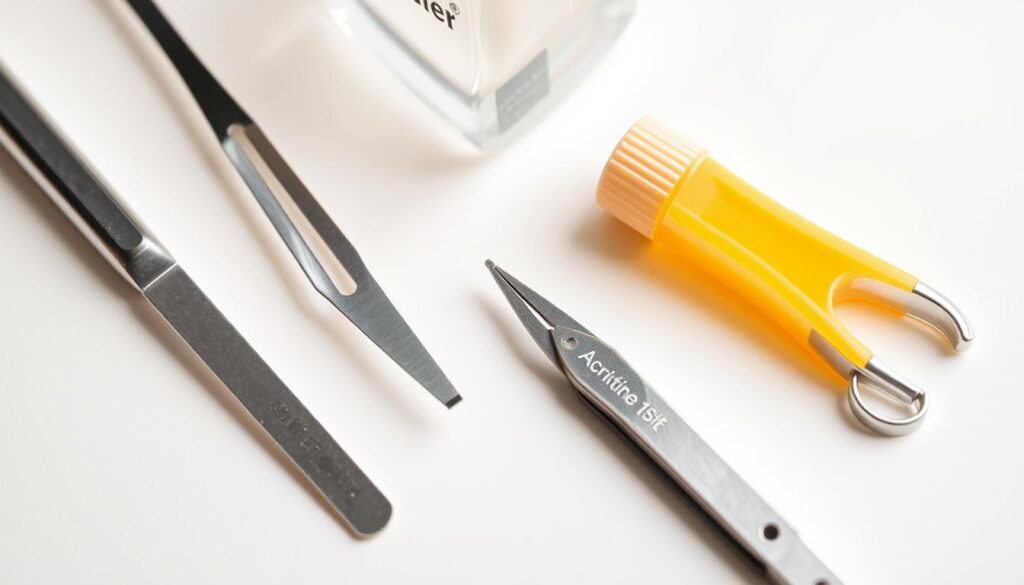
Transforming your space into a mini salon begins with smart preparation. Gather your toolkit like a pro, then create an environment that prioritizes safety and efficiency. This approach mimics salon-quality results while protecting your natural nails from unnecessary stress.
Essential Tools and Supplies
Start with nail clippers to shorten extensions, reducing pressure on your natural nail beds. A dual-grit file (100/80 grit) efficiently breaks down acrylic layers without aggressive scraping. Pure acetone outperforms standard polish remover – its strength dissolves stubborn bonds safely.
Setting Up Your At-Home Salon Station
Cover surfaces with towels to catch spills and clipped pieces. Position a fan near your workspace – acetone fumes intensify quickly in closed spaces. Keep cuticle oil and hand cream within reach for instant hydration after removal.
Bright lighting helps spot leftover acrylic during cleanup. If you’re refreshing bold styles like acrylic pink and white nails, organize tools clockwise around your bowl of acetone. This setup minimizes frantic searches mid-process.
Preparing Your Nails for Removal
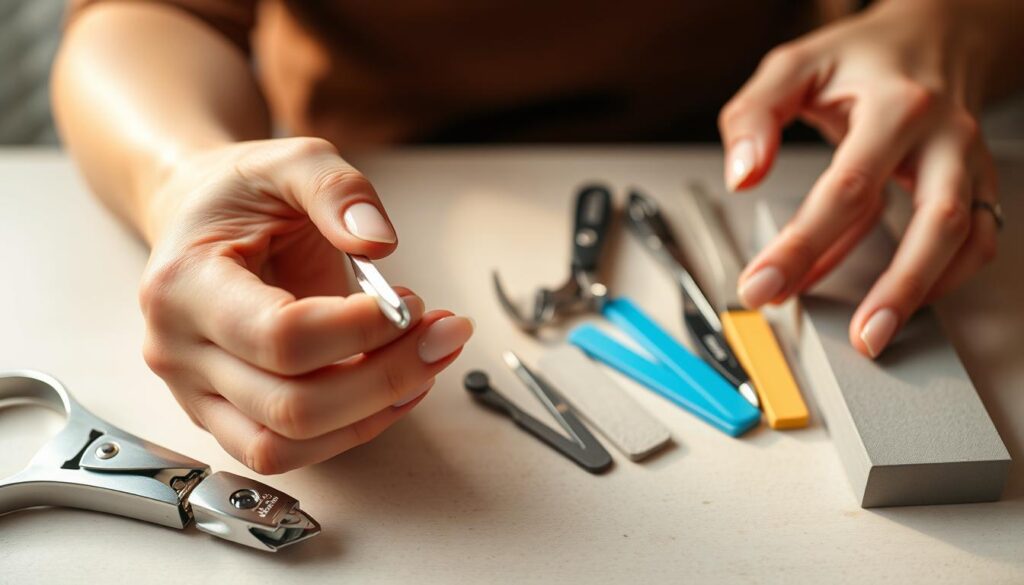
Proper preparation transforms a stressful process into a smooth transition for your natural nails. This phase ensures your nail bed stays protected while making the next steps faster and more effective.
Trimming and Filing Your Acrylic Nails
Start by clipping extensions to about two centimeters above your nail bed. Sharp clippers prevent jagged edges that could catch on fabrics. “Shortening the length first reduces pressure during soaking,” explains manicurist Amy Le.
Remove any colored polish before filing. Regular lacquer wipes away with acetone, but gel requires extra work. Use the 100-grit file side to buff off the glossy top layer until you reach the acrylic base.
| Tool | Purpose | Pro Tip |
|---|---|---|
| Nail Clippers | Reduce extension length | Cut straight across to avoid splits |
| Coarse-Grit File | Remove acrylic bulk | File in one direction to prevent heat buildup |
File the acrylic downward gently, stopping when you see a faint outline of your natural nails. Leaving a thin layer protects against accidental scraping. This step cuts acetone soak time by half compared to unfiled extensions.
“Filing removes 80% of the work – patience here means healthier nails later.”
Using Acetone for Safe Removal of Acrylic Nails
Professional-grade results begin with understanding acetone’s power. This solvent works by breaking down acrylic bonds without harming your natural nail bed. Unlike regular polish remover, pure acetone accelerates the process while keeping your hands safer.
Foil Wrap Method Explained
Soak cotton balls in 100% acetone until saturated. Place one directly on each acrylic nail, wrapping tightly with foil. Squeeze gently – a small drip confirms proper saturation. “Warmth boosts effectiveness,” notes manicurist Lisa Johnson. “Try a heated towel over wrapped fingers.”
Bowl Soaking Alternative
Submerge fingertips in an acetone-filled bowl for 20-30 minutes. Massage nails gently during soaking to loosen material. This method works well for simultaneous acrylic removal on multiple fingers. Always moisturize immediately after drying hands.
Patience pays off during the process. Rushing leads to scraping accidents. If residue remains, repeat soaking rather than forcing separation. Your nails will thank you with quicker recovery and maintained strength.