

What if your hands could speak volumes about your overall health before you even say a word? Many people overlook the connection between their daily habits and the strength of their fingertips, but your body’s hardest protein – keratin – works overtime to keep them resilient. Without consistent attention, even the most robust features can become brittle or uneven.
This isn’t just about polish or aesthetics. Maintaining your fingertips’ condition impacts everything from preventing infections to projecting confidence. Whether you’re typing, shaking hands, or simply going about your day, strong, smooth features matter for everyone – no matter your gender or lifestyle.
Our guide simplifies proven strategies into easy routines. You’ll learn how small changes, like adjusting your filing technique or choosing the right moisturizer, make a big difference. Best of all? These methods require minimal time and zero salon visits.
Key Takeaways
- Proper maintenance supports physical health and prevents common issues like brittleness.
- Daily habits directly influence appearance and durability over time.
- Gender-neutral routines benefit everyone seeking polished, professional hands.
- Science-backed methods strengthen keratin naturally without expensive treatments.
- Consistency matters more than complexity for long-term results.
Understanding Nail Health Fundamentals
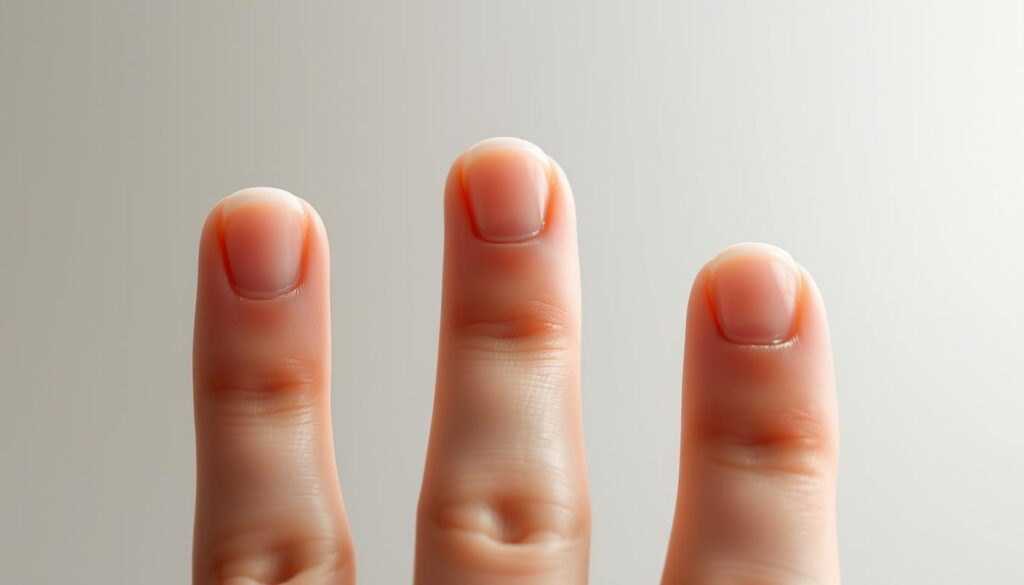
Your fingertips reveal more than you think. Changes in texture, color, or shape often act as early warnings for both minor issues and serious health conditions. While some variations are normal, persistent abnormalities deserve attention.
Recognizing Signs of Unhealthy Nails
Yellowish tints or white spots might seem harmless, but they can signal fungal infections or skin disorders. Deep ridges running horizontally often point to temporary damage, while vertical lines usually relate to aging. If your tips crumble easily or separate from the bed, it’s time to evaluate your habits.
Genetics influence thickness and growth speed. However, environmental factors like frequent handwashing or exposure to chemicals weaken even robust features. A balanced diet rich in biotin and iron supports keratin production – the protein responsible for structural integrity.
The Role of Keratin in Maintaining Nail Strength
Think of keratin as your body’s natural armor. This fibrous protein binds cells together, creating a flexible yet durable surface. When production slows due to nutrient deficiencies or health problems, brittleness and peeling become common.
Persistent changes – especially paired with skin irritation – warrant a dermatologist visit. They can distinguish between cosmetic concerns and conditions like psoriasis. For those experimenting with bold styles like stiletto nails, understanding these basics helps prevent long-term problems.
Most issues improve with simple treatment adjustments. But if symptoms linger beyond six weeks, professional guidance ensures proper healing without guesswork.
Essential Nail Care Routine for Daily Maintenance
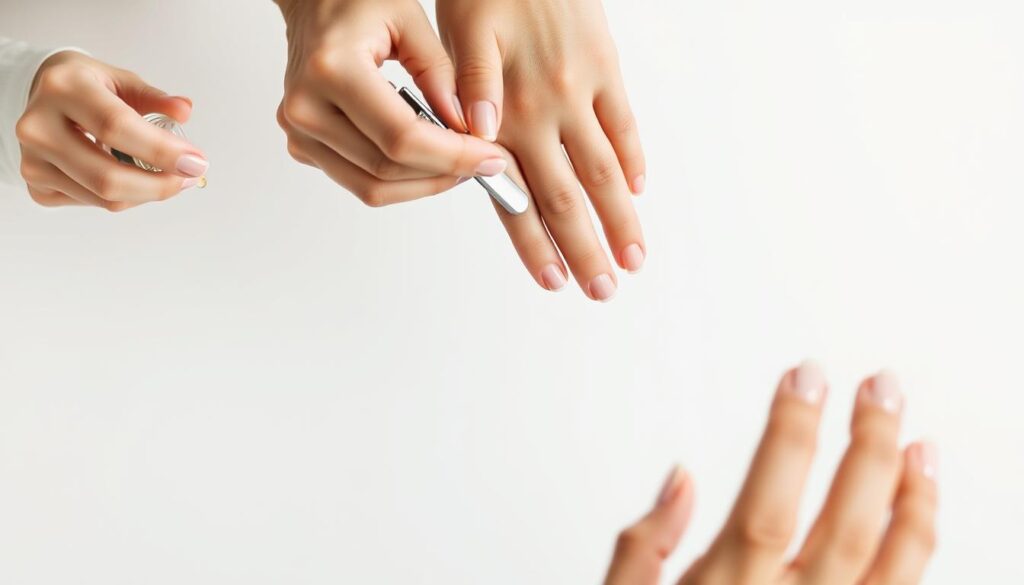
Your daily habits build the foundation for resilient fingertips. Start by thoroughly drying them after contact with water – trapped moisture invites bacteria and weakens structure. Use a clean towel, paying attention to corners where microbes thrive.
Hydration Without the Hassle
Apply moisturizer within 3 minutes of washing hands. This locks in hydration when skin absorbs it best. Focus on cuticles – healthy ones act as natural barriers against infection. Keep a travel-sized cream in your bag for midday touch-ups.
Smart Defense Against Germs
Swap nail-biting for stress balls or fidget toys. If hangnails appear, soften them with oil before trimming – never rip. Disinfect tools weekly with rubbing alcohol to prevent spreading microbes. These small steps create big protection.
Morning and bedtime routines work best for consistency. Pair moisturizing with brushing teeth or brewing coffee to make it stick. Over time, these practices become effortless while keeping your hands looking polished and feeling strong.
Expert Tips for Preventing Nail Damage
Your hands work hard daily – shouldn’t they get smart protection? Simple adjustments to your routine can transform fragile tips into resilient assets. Let’s explore techniques that combine science with practicality.
Utilizing Cuticle Oil and Proper Trimming Techniques
Hydrated cuticles act as natural shields against germs. Apply oil morning and night using circular motions – this boosts blood flow while softening edges. For trimming:
| Tool | Purpose | Frequency |
|---|---|---|
| Cuticle oil | Moisturize & protect | Daily |
| Wooden stick | Gentle pushing | Weekly |
| Sharp clippers | Straight-edge cuts | Every 10-14 days |
Soak hangnails in warm water before removal to prevent tearing. Never cut live tissue – it’s like removing your skin’s security system.
Choosing the Right Products for Healthy Nails
Not all polishes are created equal. Avoid formaldehyde-based formulas that cause brittleness. Look for breathable base coats that let oxygen through while adding shine. For bold styles like pink nails, prioritize acetone-free removers.
Step-by-Step At-Home Manicure and Pedicure Guide
Start with clean, dry hands. Apply base coat in three strokes – center, left, right. Use thin coats of color, waiting 2 minutes between layers. Finish with a quick-dry top layer to lock in vibrancy.
File in one direction only – sawing motions create microscopic cracks. Keep edges rounded or squared based on your hands’ daily tasks. Consistency beats complexity for lasting results!
Conclusion
Imagine ending your day with hands that feel as polished as they look. By now, you’ve discovered how simple habits protect against infections, boost circulation, and reduce stress—all while keeping your tips strong. These routines aren’t just about appearance; they’re about honoring your body’s needs.
You don’t need fancy tools or salon appointments to maintain healthy nails. A few minutes daily with quality products makes a lasting difference. For those who love bold styles, combining home care with occasional pink nails spa treatments keeps everything balanced and vibrant.
Remember: consistency beats complexity. If you notice persistent issues like discoloration or pain, consult a dermatologist early. Your hands deserve the same attention as your skincare routine—because when they’re healthy, you shine brighter in every interaction.