
What if the lines on your nails could reveal hidden truths about your health? Those subtle textures you’ve noticed aren’t just random flaws—they might be your body’s way of sending you a message. Millions of people worldwide experience textured nails, but few understand what these changes truly mean.
Your nails act like tiny mirrors reflecting your overall wellness. The Cleveland Clinic notes that changes in their surface often point to nutrient gaps or past health challenges. While some patterns are harmless, others demand attention. Ignoring them could mean missing early warnings—from vitamin shortages to more complex conditions.
So how do you tell the difference between normal aging and red flags? Vertical lines, for example, often appear naturally over time. Horizontal ones, however, might suggest deeper issues. This guide will help you decode these signals and take action—whether that means adjusting your diet or consulting a doctor.
Key Takeaways
- Textured nails affect people globally and often link to health status
- Your nail surface can show clues about nutrition gaps or past illnesses
- Vertical lines commonly relate to aging, while horizontal ones may need medical review
- Persistent changes could signal conditions from deficiencies to systemic disorders
- New, smoother growth often follows proper care and treatment
Introduction to Nail Ridges and Their Implications
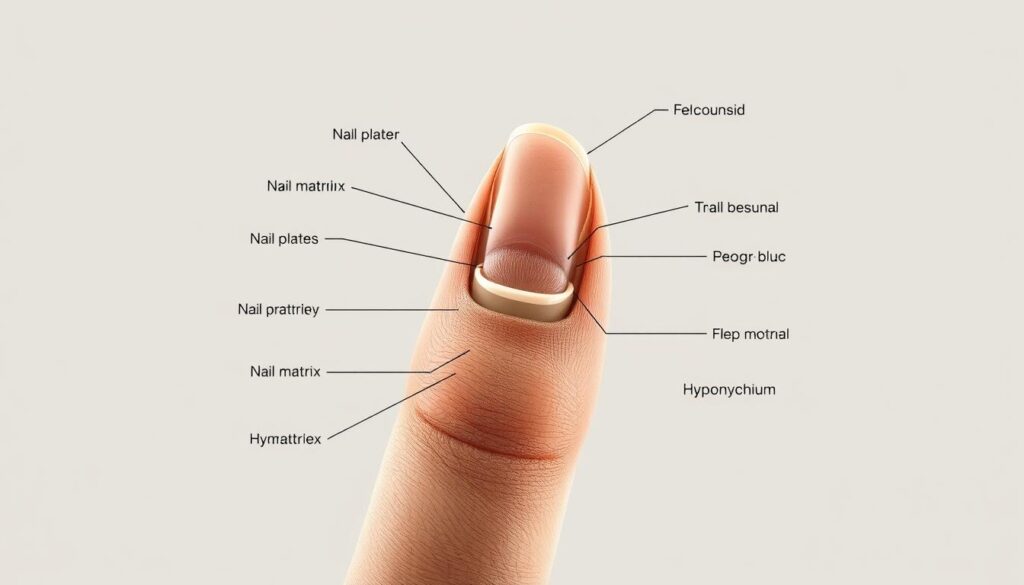
Decoding the messages in your nails starts with understanding their structure. These protective plates aren’t just for polish—they’re living records of your body’s story. From subtle color shifts to surface changes, your nails offer clues about what’s happening beneath the surface.
The Building Blocks of Strong Nails
Your nails grow from the matrix—a hidden pocket under your cuticle. This growth center shapes the nail plate, the visible part you clean and file. The bed beneath provides nourishment through tiny blood vessels, while the cuticle acts as a protective seal.
New cells push older ones forward at about 3mm monthly. That’s why a full refresh takes 3-6 months. Damage or changes during this process create lasting marks in the emerging nail plate.
| Nail Component | Key Function | Renewal Timeline |
|---|---|---|
| Matrix | Growth initiation | 3-6 months |
| Nail Bed | Support & nourishment | Continuous |
| Plate | Protection | Full regrowth in 6 months |
| Cuticle | Infection barrier | Weekly maintenance |
Your Personal Health Dashboard
Healthy nails should feel strong and look evenly colored. Persistent changes often signal needs—like pale beds hinting at low iron. Doctors frequently check nail conditions during exams because they can show:
- Early signs of thyroid issues
- Vitamin absorption problems
- Circulation challenges
Your lifestyle choices—from diet to stress management—directly impact nail strength. Simple changes like wearing gloves during chores or adding biotin-rich foods can make visible differences in just weeks.
Common Causes of Ridges in Fingernails
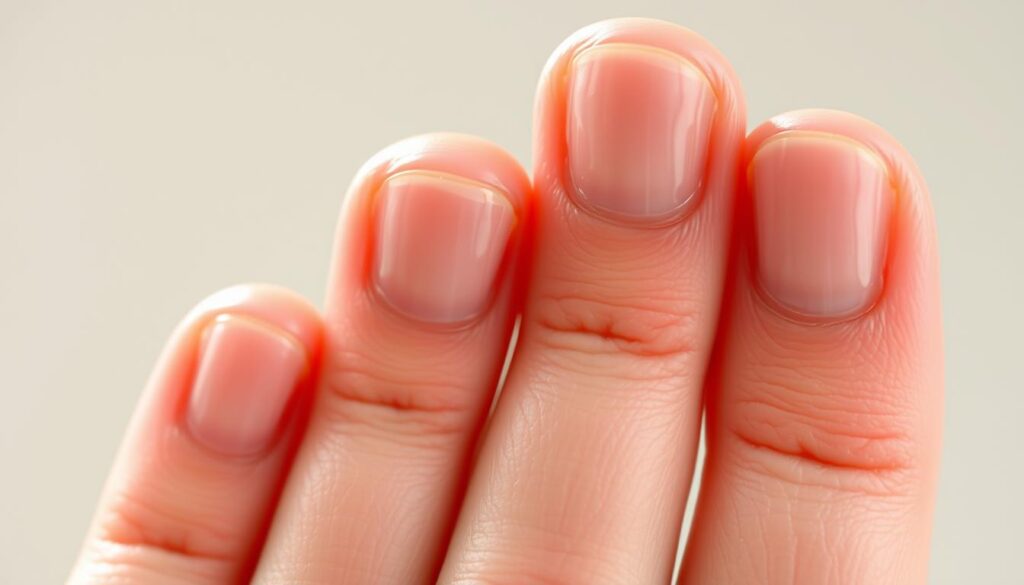
Your body often uses subtle signs to communicate internal changes. When those messages appear on your nails, they might point to dietary gaps, life stages, or physical damage. Let’s explore why these surface changes occur and what they reveal about your health.
Nutritional Gaps and Life Stages
Iron deficiency frequently leaves vertical lines, while low protein intake creates brittle surfaces. B vitamins and zinc play starring roles in maintaining smooth growth. A 2022 dermatology study found that 63% of patients with textured nails showed measurable vitamin shortages.
After age 40, collagen production slows by 1% yearly. This natural shift reduces nail bed circulation, leading to characteristic lines. Many notice increased splitting or thinning alongside these changes.
Physical Impacts and Environmental Stressors
Slamming doors or aggressive filing can dent the growth matrix. These injuries create temporary marks that grow out slowly—about 3-6 months for full recovery. Repeated exposure to cleaning chemicals or extreme temperatures worsens existing weaknesses.
- Chemotherapy drugs often disrupt cell renewal cycles
- Pregnancy hormones alter growth patterns temporarily
- Chronic stress reduces nutrient absorption by 40%
Simple protections matter. Wearing gloves during chores prevents 80% of trauma-related cases. Moisturizing cuticles daily maintains essential hydration for resilient growth.
Types of Nail Ridges: Vertical and Horizontal Differences
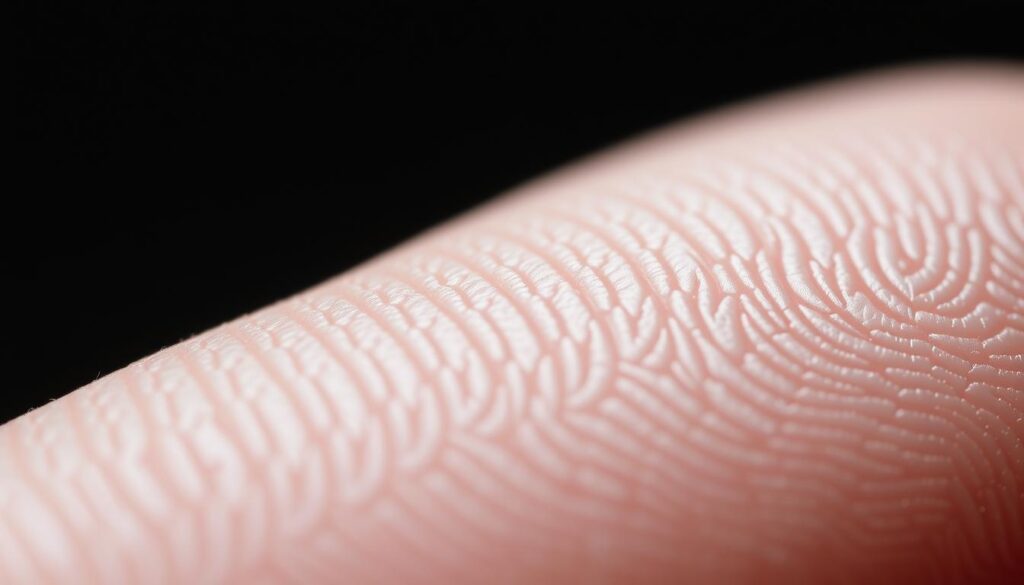
Your nails tell stories through their texture. Those parallel lines or sudden grooves aren’t random—they’re coded messages about your health history. Let’s break down what different patterns mean.
Vertical Ridges: Natural Signs of Aging?
Those faint lines running from cuticle to tip? They’re like laugh lines for your nails. Vertical nail ridges often emerge as collagen production slows. By 50, nearly 80% of people develop them.
While harmless, deeper grooves might suggest dehydration. A quick test: press your nail bed. If color returns slowly, drink more water. Most cases improve with moisturizing and balanced nutrition.
Horizontal Ridges: Understanding Beau’s Lines
Horizontal ridges demand attention. Known as Beau’s lines, these trenches form when growth pauses. Severe illness, chemotherapy, or extreme stress often trigger them. Multiple lines across several nails? That’s your body’s SOS signal.
Dermatologists measure these marks like tree rings. Since nails grow 1mm weekly, a line halfway up suggests a health crisis 6-8 weeks prior. New horizontal lines need prompt evaluation—they could reveal diabetes or thyroid issues.
| Ridge Type | Appearance | Common Causes |
|---|---|---|
| Vertical | Parallel lines tip to base | Aging, mild dehydration |
| Horizontal | Side-to-side grooves | Illness, nutrient deficits |
| Beau’s Lines | Deep horizontal bands | Systemic health events |
Underlying Health Conditions Impacting Nail Health
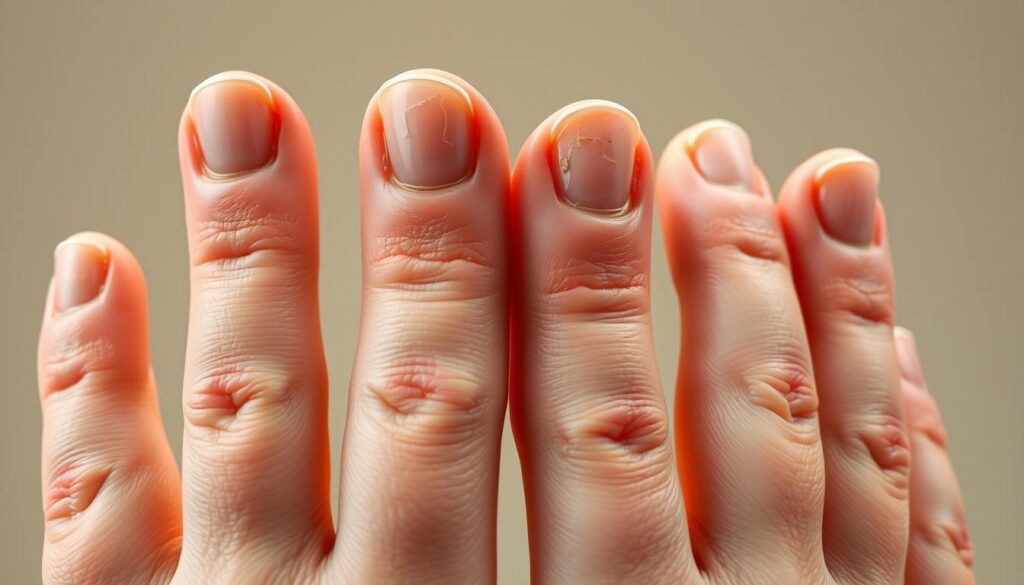
Your nails might be signaling more than just a need for a manicure. Certain health challenges leave lasting marks that reflect internal imbalances or systemic issues. Let’s explore how your body’s bigger picture shows up in these small but telling details.
When Skin Struggles Reach Your Nails
Autoimmune conditions like psoriasis often create pitted surfaces and yellow discoloration. Eczema can cause uneven textures even when your skin appears calm. These issues stem from inflammation disrupting the nail matrix—the growth engine beneath your cuticle.
Did you know 35% of psoriasis patients develop nail changes? These alterations sometimes appear months before other symptoms. Keeping nails short and moisturized helps minimize damage from scratching or rubbing.
Body-Wide Imbalances Show Up at Your Fingertips
Your digestive system plays a surprising role in nail health. Conditions like celiac disease or Crohn’s can block nutrient absorption, leading to weak growth patterns. Thyroid disorders—both overactive and underactive—alter growth speed dramatically.
Heart attacks and diabetes leave distinct signatures too. Reduced blood flow from cardiovascular problems creates horizontal grooves, while high blood sugar weakens nail structure. Even medications for chronic disease management sometimes affect growth cycles as unintended side effects.
Persistent changes warrant a healthcare visit. Many patients discover underlying conditions through nail exams before other signs emerge. Early detection often leads to simpler solutions and better outcomes.
Effective Treatments and Preventive Measures for Ridges in Fingernails
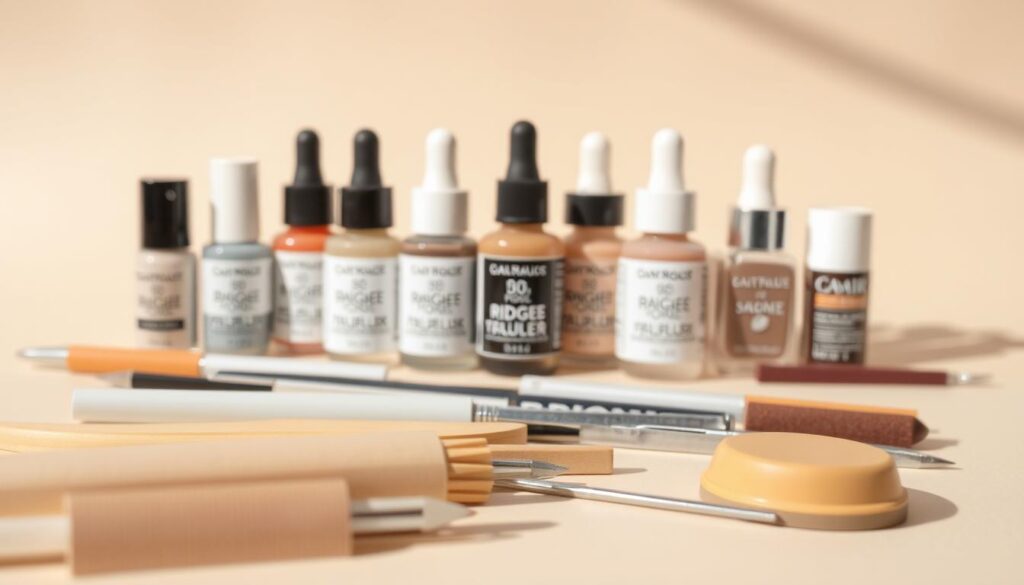
Ever wondered how your daily habits influence those subtle lines on your nails? The right approach can transform your nail care routine from guesswork to targeted action. Let’s explore practical solutions that address both visible concerns and root causes.
Home Care and Nutritional Strategies
Start with gentle buffing to smooth surfaces without thinning the nail plate. Cuticle oils with vitamin E lock in moisture, while gloves protect against dish soap and cleaning sprays. For 68% of people, these simple changes reduce visible texture within 8 weeks.
Your diet plays a starring role. Biotin-rich foods like eggs and almonds may help strengthen weak areas. Iron from spinach and lean meats supports oxygen flow to nail beds. Always consult healthcare providers before starting supplements—what works for others might not suit your needs.
Medical Treatments and Professional Guidance
Persistent changes often signal deeper issues. Dermatologists might prescribe topical steroids for eczema-related cases or antifungal creams for infections. Blood tests can reveal hidden deficiencies requiring targeted treatment.
| Approach | Best For | Timeframe |
|---|---|---|
| Moisturizing routine | Mild dehydration lines | 2-3 months |
| Biotin supplements | Thin, splitting surfaces | 4-6 months |
| Prescription treatments | Autoimmune-related damage | Varies by condition |
Seek immediate medical care if you notice sudden horizontal grooves or color changes. These could indicate blood sugar issues or circulatory problems needing prompt attention. Remember—healthy nails start from within, but sometimes need professional support to truly thrive.
Conclusion
Your nails aren’t just beauty features—they’re health messengers. Those subtle textures and patterns act like a personal wellness dashboard. While vertical lines often come with age, horizontal marks demand attention. Spotting these differences helps you respond wisely—whether through self-care or professional guidance.
Think of your nail surface as a timeline. Changes appearing today might reflect events from months ago. Gentle buffing and cuticle care can improve appearance, but lasting solutions require digging deeper. Skin conditions, nutrient gaps, or systemic issues often hide behind surface changes.
When lines stretch horizontally across multiple nails, don’t wait. This pattern frequently signals past illness or current health challenges. Medical teams use these clues to uncover hidden conditions—from thyroid imbalances to circulatory concerns. Your proactive monitoring makes early detection possible.
Keep nails strong by pairing smart habits with expert insights. Moisturize regularly, protect hands during chores, and watch for new symptoms. Remember: smoother growth follows when you address root causes, not just surface flaws. Trust healthcare providers to connect nail changes with your body’s bigger picture.