

What if a single ink droplet beneath the eye could reveal a lifetime of stories? The teardrop tattoo, often misunderstood and shrouded in mystery, holds meanings that shift like sand depending on who wears it—and where.
This unassuming design carries more weight than meets the eye. Born in prison systems during the 1970s, it first appeared in a New Yorker piece documenting Mexican gang culture. Today, its interpretations range from mourning lost loved ones to marking criminal histories, creating a cultural tug-of-war between personal expression and societal judgment.
You’ll find that context is everything. In some U.S. regions, this symbol might represent years behind bars. Elsewhere, it whispers of darker deeds. Yet mainstream media has blurred these lines, with celebrities sporting the mark as edgy fashion statements—often unaware of its loaded past.
Why does this tiny shape spark such strong reactions? Its power lies in duality: a personal reminder for some, a warning sign for others. Your perception of it might change as you uncover how location, culture, and individual stories reshape its message daily.
Key Takeaways
- Originated in 1970s prison culture, with meanings tied to incarceration or violence
- Interpretations vary widely by geographic region and social context
- Balances personal grief symbolism with criminal association
- Gained mainstream attention through celebrity adoption
- Requires careful consideration due to potential social stigma
Exploring the Origins and History of Tear Drop Tattoos

That little droplet-shaped ink isn’t just a fashion statement—it’s a chapter from a hidden past. While its exact beginnings remain debated, written records first spotlighted this symbol in a 1970s New Yorker article. The piece detailed how Mexican gang members used the mark after prison stints, turning personal pain into a public badge.
Historical Roots in Prison Culture
Behind bars, the design became a silent language. Inmates inked it to showcase survival in harsh environments—a permanent record of time served or losses endured. Positioned near the eye, it functioned as unspoken currency. As one former convict noted: “You didn’t ask questions. You just understood what it meant.”
This placement served dual purposes. It maximized visibility while echoing universal symbols of grief. Unlike hidden body art, facial markings couldn’t be erased or ignored.
Cultural Shifts and Pop Culture Influence
Everything changed when Hollywood took notice. Johnny Depp’s 1990 role in Cry-Baby flipped the script, transforming the symbol from prison code to rebellious chic. Soon, musicians like Lil Wayne and Amy Winehouse adopted it, often unaware of its loaded history.
This cultural crossover sparked debates. Was it artistic expression or appropriation? While some saw edgy self-expression, others recognized a dangerous disconnect from the mark’s origins. Today, you’ll spot it equally in streetwear campaigns and correctional facilities—a testament to its complex evolution.
Decoding the Tear Drop Tattoo Meaning in Prison and Gang Contexts

Behind the stark walls of incarceration, symbols speak louder than words. This facial marking acts as both personal diary and public warning—a visual code decipherable only to those familiar with its rules.
Prison Interpretations and Significance
Inside correctional facilities, this symbol often tells brutal stories. Some wear it as proof of surviving assault, while others bear it unwillingly—a cruel label forced by stronger inmates. “It’s not about pride here,” explains a former convict. “An empty outline might mean attempted murder. Solid ink? That’s permanent proof.”
Gang Affiliations and Their Symbols
Street organizations repurpose the design for their own messaging. Certain gangs use multiple droplets to mark territory disputes. Others reserve it for members who’ve completed violent initiations. The left-eye placement becomes crucial—it signals allegiance to specific groups in many urban areas.
Regional Variations in Meaning
Cross state lines, and the symbolism shifts dramatically. East Coast facilities might interpret three droplets as years served, while Southwest prison systems could link them to drug-related charges. Even the shape matters—pointed versus rounded edges can differentiate between theft and assault charges in some regions.
Deep Dive into “tear drop tattoo meaning” and Emotional Symbolism
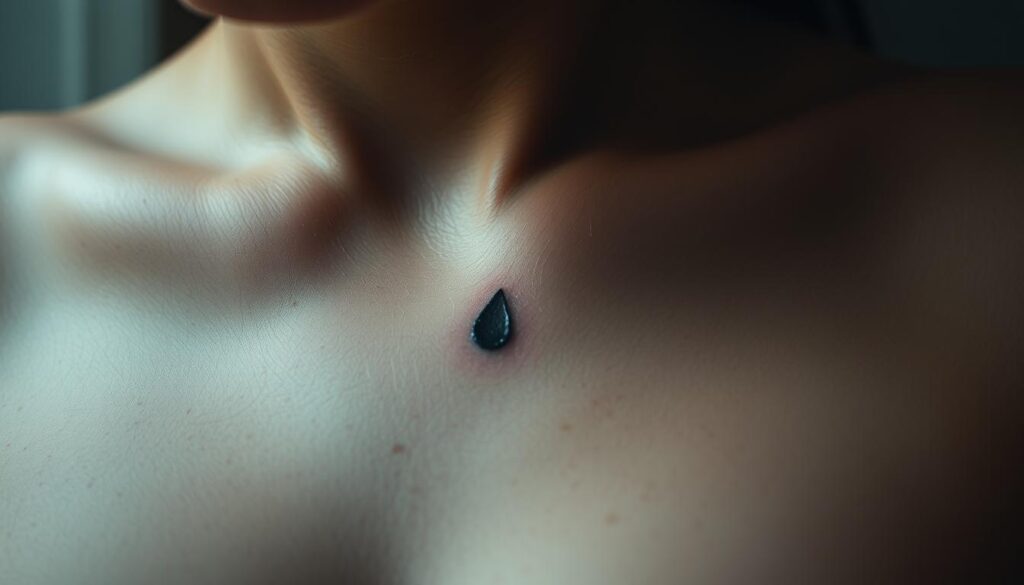
Beneath the skin lies more than ink—a silent language of heartache and resolve. This permanent marking often becomes a bridge between inner turmoil and outward expression, carrying stories too heavy for words.
Mourning Made Visible
Many choose this design to keep memories alive. A filled droplet might honor someone who’s passed, while an outline suggests unfinished business. “It’s like carrying their heartbeat near your eye,” shares a wearer who lost a sibling.
Three key variations reveal deeper layers:
- Solid ink: Completed mourning process
- Hollow shape: Lingering anger or unresolved pain
- Multiple drops: Cumulative losses or transformative events
From Pain to Purpose
For some, the mark evolves. What begins as sorrow can become a reminder of resilience. A Chicago artist explains: “Mine started as grief for my mom. Now it’s proof I survived the darkest year of my life.”
Empty designs sometimes shift meaning over time. A filled-in outline might symbolize closure or personal growth. This fluidity shows how body art adapts to life’s changes.
Design Variations and Placement: More Than Just an Ink Mark
Where you ink speaks as loudly as what you ink. The strategic positioning of this symbolic design carries practical and cultural weight that extends far beyond aesthetics.
Facial and Body Placement Considerations
Under-eye positions dominate discussions for good reason. This high-visibility area near the eyes acts like a neon sign for personal history. But alternative spots offer creative solutions:
| Location | Visibility | Maintenance | Common Symbolism |
|---|---|---|---|
| Under Eye | Maximum | Low | Loss/Experience |
| Finger | Moderate | High | Discreet Remembrance |
| Cheek | Medium | Medium | Personal Journey |
Finger placements near the corner of the nail bed allow quick concealment. “Clients choose hands when they want control over who sees their story,” notes a Brooklyn tattoo artist. These designs fade faster though—expect touch-ups every 12-18 months.
Left versus right eye positioning matters in some communities. Urban legends suggest the left side indicates violent acts, while the right symbolizes personal loss. Always research regional interpretations before committing.
Integration into sleeve art or back pieces softens the design’s edge. A single droplet hidden in floral patterns maintains symbolism without overwhelming observers. This approach works well for professionals needing workplace discretion.
Your body becomes a canvas of calculated choices. Consider visibility against career goals and social circles. What whispers truth to you might shout assumptions to others.
Tear Drop Tattoos in Pop Culture and Celebrity Trends

When Hollywood glitz collides with street symbolism, you get cultural earthquakes—and few symbols illustrate this better than the journey of this facial marking. From gritty origins to red carpets, its transformation reveals how art absorbs and reshapes meaning.
Influence on Music and Entertainment
Johnny Depp’s 1990 Cry-Baby role rewrote the rules. His character’s single inked droplet turned prison code into brooding romance, sparking a wave of copycats. Musicians soon followed: Amy Winehouse wore hers as a raw diary entry of heartbreak, while Lil Wayne’s 2012 version became a lightning rod for debates about cultural ownership.
Hip-hop artists walk a tightrope with this symbol. Some embrace it as authentic street art, others criticize it as costume jewelry for those untouched by its harsh origins. “You can’t rent pain,” argued one rapper during a 2018 podcast debate about the trend.
Notable Celebrities and Their Stories
Jeremy Meeks’ 2015 mugshot flipped the script. His striking features and visible facial markings went viral, blending criminal history with unexpected public fascination. Suddenly, the symbol gained a dangerous allure in mainstream media.
Three key celebrity impacts:
- Depp’s fictional portrayal introduced edgy romanticism
- Winehouse’s personal struggles humanized the design
- Lil Wayne’s adoption forced conversations about artistic license
Today, you’ll spot these markings equally on Instagram influencers and underground artists. While some wearers research the history, others simply chase aesthetics—a disconnect that keeps the symbol’s meaning in constant flux.
The Link Between Tear Drop Tattoos and Incarceration

Behind every marked face lies an unspoken code. In correctional facilities, certain designs act as résumés written in skin. The teardrop tattoo operates as both personal diary and public alert system—a visual shorthand understood by those who live by unwritten rules.
Inmate Perspectives and Stories
Authentic prison ink carries instant credibility—or danger. New arrivals sporting unearned markings often become targets. “It’s like wearing a medal you didn’t win,” explains a former inmate. Correctional officers note these designs help map facility hierarchies, with veterans scrutinizing fresh faces for counterfeit symbols.
Long-term sentences sometimes get commemorated like military service stripes. Similar to cobweb tattoos marking years inside, multiple droplets can represent decade-long stretches. But meanings shift cellblock to cellblock—three dots might signal a life sentence in Texas, yet indicate gang rank in Illinois.
These markings function as social currency. Legitimate ones command respect, while fakes invite violence. A Chicago parole officer shares: “We train staff to read body art—it’s our first clue about potential conflicts.” The permanent nature complicates reentry, as employers often associate the design with criminal history.
Psychological impacts run deep. Earned symbols become twisted badges of survival, while impulsive choices haunt wearers long after release. As societal perceptions clash with personal stories, the ink’s power persists—both inside prison walls and beyond.
Emotional Symbolism and Personal Stories Behind Tear Drop Tattoos

Skin becomes a canvas for untold stories when words fail. These permanent markings often hold chapters of human experience that defy simple explanations. Let’s explore how individuals reclaim this symbol to express deeply personal narratives.
Grief, Loss, and Healing Through Ink
For many, the design serves as emotional armor. A Chicago teacher shares: “Mine honors students I’ve lost to violence. It’s my daily reminder to fight for change.” Three common therapeutic uses emerge:
- Memorial tributes: 68% of wearers in a 2022 survey linked theirs to lost loved ones
- Solidarity marks between partners separated by incarceration
- Milestone symbols for surviving addiction or trauma
| Symbol Type | Primary Focus | Common Placement |
|---|---|---|
| Memorial | Honoring others | Under right eye |
| Solidarity | Connection to others | Cheek or neck |
| Personal Growth | Individual journey | Behind ear |
Individual Journeys and Meaningful Transformations
Soccer legend Thierry Henry’s facial marking reflects his Roma heritage and life struggles. “Each curve represents tears shed, but also strength gained,” he told ESPN. This duality appears in countless stories:
A military widow’s teardrop evolved into a dove after years of healing. Former gang members convert symbols of violence into peace pledges through artistic redesigns.
Your interpretation matters most. What begins as sorrow can become a compass pointing toward resilience. These designs prove that personal meaning often outweighs societal assumptions.
Care, Maintenance, and the Cost of a Tear Drop Tattoo
Keeping your facial ink vibrant requires more than artistic skill. Proper aftercare determines whether your design fades into a blur or remains crisp for years. Let’s explore how to protect your investment while managing expenses.
Aftercare and Longevity Tips
Fresh ink near the eye demands gentle handling. Clean with fragrance-free soap twice daily—pat dry instead of rubbing. Avoid makeup for 10 days to prevent infections. “Think of it as healing a wound, not just preserving art,” advises a NYC dermatologist.
Sun exposure bleeds pigment faster than you’d expect. Apply mineral sunscreen daily, even in winter. Touch-ups every 2-3 years maintain sharp edges on delicate facial skin.
Budget Considerations and Tattoo Upkeep
Prices swing wildly based on placement and artist reputation. Simple under-eye designs start at $80-$150, while intricate shaded versions hit $300+. Factor in aftercare products: hypoallergenic ointments and specialized sunscreens add $20-$40 monthly.
Urban studios often charge 30% more than suburban shops. Prioritize experienced artists—cheap work risks blowouts in thin facial skin. Remember: quality ink lasts longer, reducing long-term costs.
Your commitment to care shapes the story your ink tells. With smart planning, this permanent marker becomes a lifelong companion rather than a fading regret.