
Ever left the salon wondering, “What happened to my hair?” An ugly haircut can feel like a personal crisis. But don’t worry, we’ve got your back! Whether you’re dealing with an unflattering style or a horrible haircut gone wrong, there are solutions. You can fix a bad haircut and get back to loving your locks. So, what should you do next?
Key Takeaways
- Bad haircuts happen to the best of us; it’s how you handle them that matters.
- Several factors can contribute to an ugly haircut, such as miscommunication or stylist errors.
- Assessing the damage is the first step to finding the right solution.
- Immediate fixes and good hair products can temporarily improve your look.
- Finding a qualified stylist for repairs can help you regain confidence in your hair.
Understanding Why Haircuts Can Go Wrong
Finding the perfect haircut can feel like searching for a needle in a haystack. This is true, even when you’re looking for a “hair salon near me.” The difference between a great haircut and a bad one often comes down to a few key factors. We will look at why haircuts can fail and how to avoid these problems in the future.
Common Mistakes Your Stylist Might Make
Even the most skilled professionals can make mistakes. Professional hairstylist missteps can happen for several reasons:
- Incorrect Technique: Using the wrong cutting technique for your hair type can lead to uneven layers and a choppy appearance.
- Misjudging Hair Texture: Styling products and tools designed for fine hair may not work for coarse or curly hair.
- Inadequate Training: Sometimes, a stylist hasn’t been adequately trained to handle specific haircuts or styles.
Miscommunication During the Consultation
Stylist-client miscommunication is another big reason for a bad haircut. Here are a few tips to make this step better:
- Be Explicit: Showing photos of your desired style can help your stylist understand your vision more clearly.
- Ask Questions: Don’t hesitate to ask your stylist if your chosen style suits your hair type and face shape.
- Check Understanding: Make sure that both you and the stylist are on the same page before any cutting begins.
Assessing the Damage of Your Haircut
After a haircut disaster, the first thing to do is a detailed check-up. It’s important to understand how bad it is and what to do next. Let’s look at the steps involved.
Evaluating the Length and Style
Begin by looking at the length and style of your haircut. If it’s too short, uneven, or just doesn’t look right, find out why. Compare it to what you wanted to see. This helps you tell the stylist exactly what you need.
Recognizing Hair Texture Issues
Haircuts can sometimes not match your natural texture, causing problems. Check if your new style makes your hair frizzy, flat, or uneven. Spotting these issues is vital for fixing your haircut.
A careful check-up helps you understand the problem fully. It prepares you for the steps to fix it.
Immediate Solutions After a Bad Haircut
Dealing with a bad haircut can be stressful. But, there are quick steps you can take to fix it. Stay calm and try some home remedies and haircare products.
Quick Fixes You Can Do at Home
Using home remedies for bad haircut can really help. Try changing your parting or trying new hairstyles to hide bad cuts. Use headbands, scarves, or clips to shift focus from the bad spots.
Loose waves from a curling iron can also help. They add volume and hide flaws.
The Power of Hair Products
The right haircare products can make a big difference. Mousse can make your hair look fuller. Pomade can keep unruly hair in check.
Texturizing spray gives a cool, undone look. A good leave-in conditioner can also nourish your hair, helping it grow out.
Finding a Good Stylist for Repair
Finding a skilled hairstylist is key to fixing a bad haircut. Look for recommendations and do your research. This will help you find a stylist who knows how to work with your hair.
Tips for Choosing the Right Professional
When picking a hairdresser, think about their experience and what others say about them. A good stylist will know how to fix your hair problems. They should listen and understand what you want.
What to Look for in a Portfolio
Hair salon portfolios show a stylist’s talent and creativity. Look for variety in their work, showing they can handle different hair types and styles. A good portfolio helps you choose the right stylist.
Embracing the Funky Look Temporarily
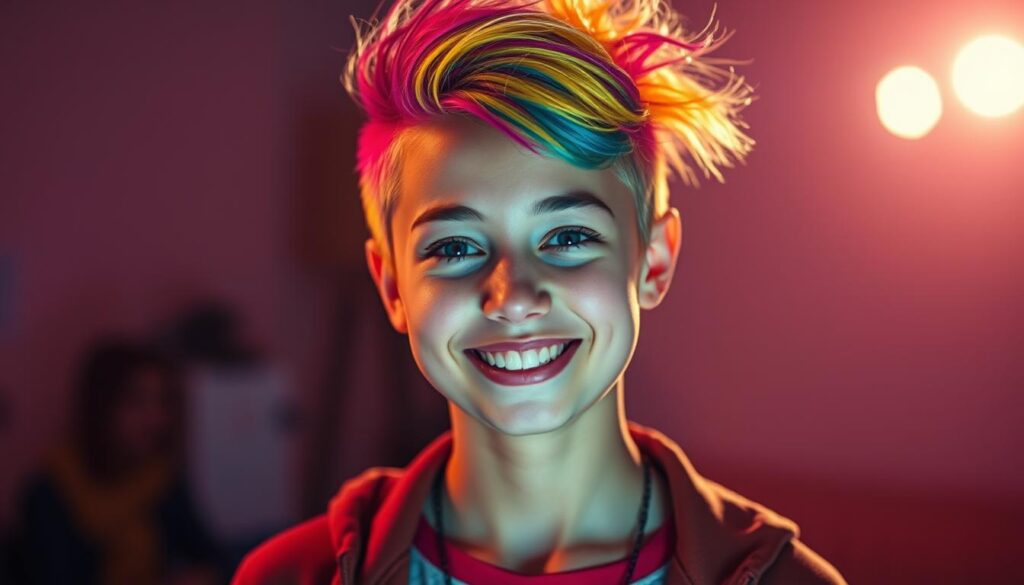
Dealing with a bad haircut doesn’t have to be sad. See it as a chance to try a new hairstyle. Bold choices and creative solutions can turn a bad haircut into a cool fashion statement.
Rocking an Unconventional Style
Why not try something different with your hair? Go for edgy cuts or bold colors you’ve never tried before. Look at fashion icons like Miley Cyrus or Rihanna for inspiration. They’ve had unforgettable and bold hairstyles.
Accessorizing to Distract from the Hair
Hair accessories can really help when you’re trying a new look. A chic headband, vibrant scarf, or dazzling hair clips can draw attention away from your haircut. They add personality and flair without needing a full makeover.
Here’s how different hair accessories can help:
| Accessory | Benefit |
|---|---|
| Headbands | Keeps hair out of your face while adding a stylish element |
| Scarves | Versatile and can be tied in various ways to suit any occasion |
| Clips/Barrettes | Add instant glamour and can accentuate certain hair sections |
| Hats | Perfect for fully covering up a bad haircut while making a fashion statement |
A bad haircut isn’t the end of the world. It’s a chance to be creative and try something new. Embrace these changes with confidence!
Hair Growth Strategies for Recovery
Recovering from a bad haircut doesn’t have to be stressful. By using hair growth tips and focusing on haircare nutrition, your hair can grow back stronger and healthier.
Nutritional Tips for Healthy Hair Growth
Nutrition is key for healthy hair growth. Here are some tips to boost your haircare nutrition:
- Eat foods high in vitamins A, C, and E, and zinc and iron.
- Get enough protein from eggs, fish, and nuts.
- Drink at least 8 glasses of water a day.
- Think about taking biotin supplements for hair health.
Recommended Hair Growth Products
The right hair products for growth can help your hair recover. Here are some top picks:
| Product | Benefits |
|---|---|
| Rogaine Foam | Clinically proven to regrow up to 25% more hair. |
| Viviscal Supplements | Promotes existing hair growth while reducing hair thinning. |
| Nutrafol | Supports healthier, thicker hair in three to six months. |
| OGX Biotin & Collagen Shampoo | Infuses hair with essential nutrients to promote fullness and thickness. |
By using these hair growth tips and a balanced diet, along with the right hair products for growth, you can improve your hair recovery. This will lead to robust and healthy hair growth.
Exploring Different Hairstyling Options
After a bad haircut, it’s time to try new hairstyling techniques. These can hide imperfections and change your look. Whether your hair is short or you want updos, there are many creative options.
Styling Techniques for Short Hair
Short hair styles are fresh and versatile. Texturizing products can add volume and movement. Sleek, straightened styles give a chic look.
A stylish pixie cut or layered bob can hide uneven patches. This makes you feel confident in your new look.
Creative Updos to Mask the Cut
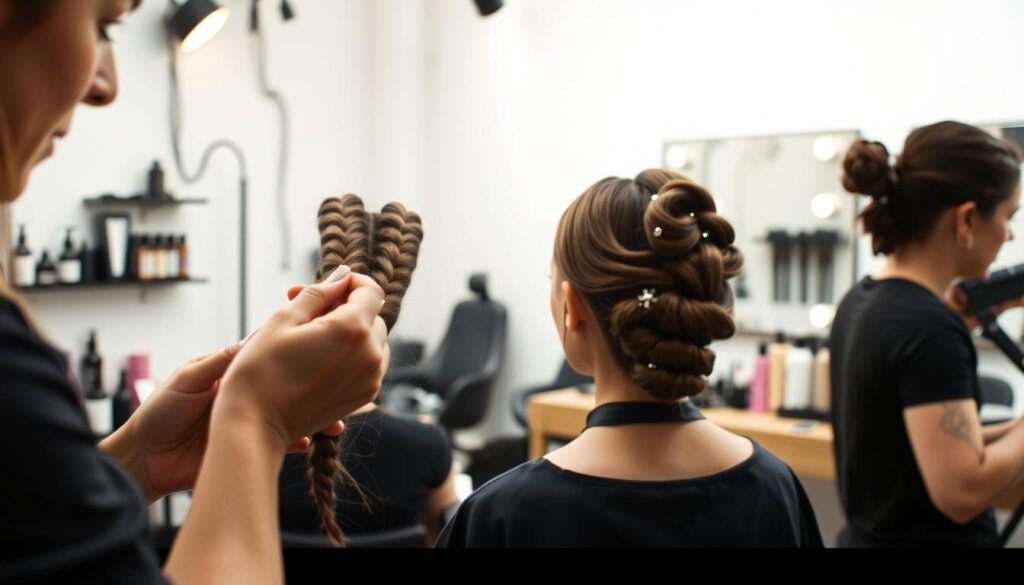
Updos are a great way to hide a bad haircut. Styles like messy buns, braided crowns, or twisted updos can cover unsightly areas. They add sophistication.
Adding accessories like headbands, pins, and clips can make your look even better. It adds a personal touch.
The Impact of Social Media on Hair Trends
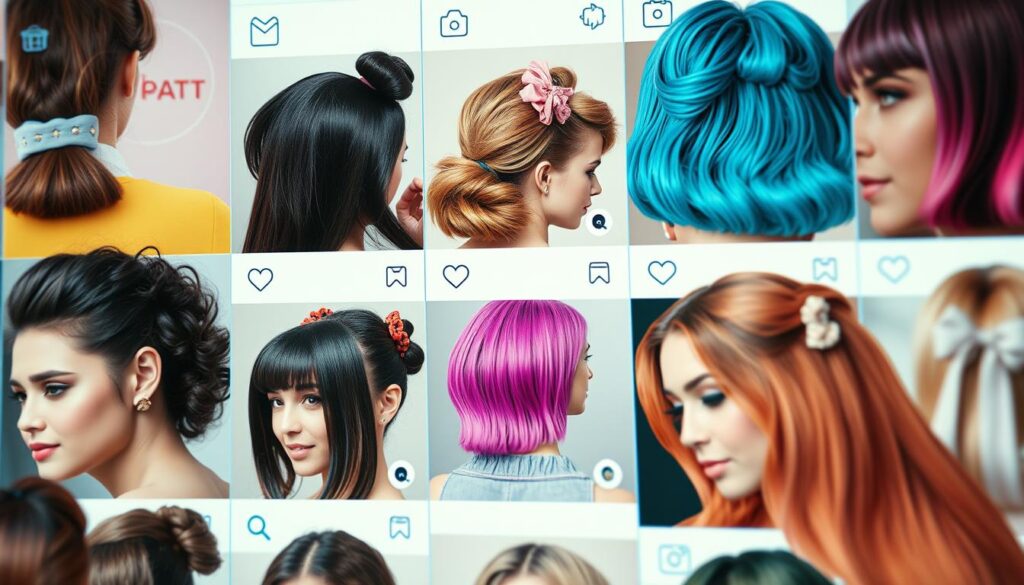
Social media has changed how we see and follow hair trends. Sites like Instagram and TikTok are now key places for hair inspiration. They make it simple to find new styles and connect with experts for personalized hairstyling advice.
Influencers with Inspiring Hair Transformations
Influencers are big in shaping hair trends social media talks. They share their makeovers and tutorials, inspiring millions. Stars like Kim Kardashian and James Charles show how a great haircut can change your look.
Avoiding Trends That May Not Suit You
While social media is full of hair ideas, it’s key to pick wisely. Not every style fits everyone. By following personalized hairstyling tips, you can find a look that suits you. Steer clear of trends that don’t fit your hair type, face shape, or lifestyle to avoid bad haircuts.
Dealing with Emotional Feelings About Your Hair
Changing your hair can really affect how you feel about yourself. It can make you feel less confident. Whether it was a bold choice or a mistake, it’s important to accept the change.
Accepting Change and Moving Forward
Change, like a new haircut, can be tough. But, see it as a chance to try new things. You can explore different styles and find new accessories. It’s a way to show you can handle change.
Finding Confidence After a Bad Hair Day
Feeling good after a bad haircut takes a positive mindset. Focus on your strengths and be kind to yourself. Do things that make you happy. Remember, your confidence comes from inside and isn’t changed by your hair.
Prevention Tips for Future Haircuts
Getting a great haircut means being ready and talking clearly with your stylist. Follow our tips for a salon visit that makes you feel great and confident.
Preparing for Your Next Appointment
Wash your hair 36 hours before your cut. This balances oils, making your hair fresh but not too oily. Bring 3-5 photos of the style you want, from different angles.
Talk about how you want to style your hair and the length you prefer. Show up with dry, clean hair so your stylist can see your natural texture.
Communicating Clearly with Your Stylist
Talking well with your stylist is key. Tell them what you like and ask about the cut, length, and style. A good stylist will also ask about your lifestyle to make the cut right for you.
Get trims every 4-6 weeks to keep your haircut looking good. Use good hair products for your hair type. Think about a deep conditioning treatment before big changes to keep your hair healthy.
By being well-prepared and talking clearly with your stylist, you’ll have a great salon experience. This way, you’ll love your haircut and avoid any future problems.
Highlights and Low Lights: A New Perspective
Getting highlights and low lights can be thrilling yet scary. Learning about hair coloring techniques and choosing hair color that fits your style can lead to a stunning change.
How Color Can Transform Your Look
The right color can change your look in surprising ways. Transformative hair highlights can make your hair look fuller and more lively. Low lights, on the other hand, add contrast and richness, giving a natural look.
Using these coloring techniques can subtly change your look without a big overhaul. They’re perfect for those who want to boost their natural beauty with little upkeep.
Choosing the Right Shades for You
Choosing hair color involves many factors. Knowing your skin tone, eye color, and style is key. A pro can help pick the best shades for you. Remember, the seasons can also affect your color choice. Warmer tones brighten in winter, while cooler shades are better in summer.
The aim of transformative hair highlights and low lights is to create a look that’s both harmonious and stunning. It should make you feel confident and gorgeous.
Hair Care Routines Post-Cut
Keeping your hair healthy and stylish after a haircut is key. A good *daily haircare* routine is essential. Using the right *hair management products* helps you achieve your hair goals.
Establishing a Daily Haircare Regimen
Start your *post-haircut care* by washing your hair with gentle shampoo and conditioner. Choose products that match your hair type. This keeps your hair clean and shiny.
- Wash hair with a sulfate-free shampoo.
- Condition with a product tailored to your hair’s needs.
- Pat hair dry with a microfiber towel.
- Use a wide-tooth comb to detangle gently.
How you care for your hair daily is very important. Try to avoid using too much heat and let your hair air-dry. Regular trims and deep conditioning treatments also help keep your hair healthy and looking great.
Products to Help Style and Manage Your Hair
Quality *hair management products* make a big difference. Use styling products like volumizing mousse, heat protectant spray, and smoothing serums. They help you style your hair while protecting it from damage.
Here are some top *hair management products*:
- Volumizing Mousse – Adds body and fullness.
- Heat Protectant Spray – Shields hair from heat damage.
- Smoothing Serum – Controls frizz and adds shine.
Adding these products to your routine can greatly improve your hair’s health and style. Sticking to a consistent *daily haircare* routine keeps your hair looking great, even after a haircut.
By following these tips and using the right products, you can take care of your hair after a haircut. This leads to healthier, more vibrant hair every day.
Seeking Help from Friends and Family
When you’re not happy with your haircut, talking to family and friends can help. They can give you feedback on hairstyles and boost your confidence. Working together on styling can make fixing your haircut fun and effective.
Getting Honest Feedback on Your Look
Your loved ones can give you honest and helpful family advice on hair. They might see things you don’t, helping you understand your hairstyle better. Their opinions can lead you to styles that fit you better.
Collaborating on Styles Together
Try collaborative hairstyling with family and friends. You can try out different looks, accessories, or hair products together. This way, you can find creative fixes for your haircut. Plus, it’s a great way to bond and enjoy the process.
Inspirational Stories of Hair Makeovers
Finding the perfect haircut can be a journey with ups and downs. Many have shared their hair makeover stories, showing how mistakes can lead to amazing results. These tales teach us that even bad haircuts can end in stunning looks.
Real-Life Transformations to Motivate You
Celebrities and regular folks alike have inspiring hair stories. Zendaya, for example, tried many styles before finding her perfect look. Her journey shows that with patience and self-discovery, you can find your ideal hairstyle.
“I think having a bad haircut builds character. It taught me what suits me better, and now I feel more confident,” Zendaya shared in an interview.
Lessons Learned from Hair Misadventures
Missteps can teach us the most. Emma Watson, for instance, cut her hair into a pixie cut after Harry Potter. This change showed us the power of learning from our hair mistakes. Every journey, with its ups and downs, helps us discover what works and what doesn’t.
Final Thoughts on Ugly Haircuts
Dealing with hair challenges can feel overwhelming. But remember, hair grows back, and this too shall pass. See it as a chance to try new styles and find what really works for you.
Understanding That It’s Only Hair
When a haircut doesn’t turn out right, keep things in perspective. Hair is incredibly versatile. It can be cut, styled, colored, and even grown out again. This “bad haircut” is just a temporary setback.
Embracing the change in your hair can help. Knowing it will get better with time and care is key.
Encouragement for Your Next Styling Adventure
Use this experience to boost your confidence in hairstyling. Try a new stylist, change up your hair care, or get inspired online. Your next haircut can be a positive journey.
Always talk clearly with your stylist and stay open-minded. Each try brings you closer to finding your perfect look.