
Body art steeped in history offers more than visual appeal—it tells stories of heritage and timeless wisdom. Ancient cultures used intricate patterns to represent life’s deepest mysteries, and few styles capture this better than designs inspired by early European traditions. These symbols, often linked to nature’s elements like water or fire, weave together themes of existence and spirituality.
You’ll notice endless loops and knots in these patterns. Each twist carries meaning, from unity to the cycle of rebirth. For many, these markings honor ancestral roots while celebrating personal growth. They’re not just decorations but conversations with the past.
Modern adaptations blend old-world charm with fresh creativity. Whether you choose a minimalist wrist piece or a full-sleeve masterpiece, the artistry adapts to your vision. This flexibility explains why such designs remain sought-after across generations.
Key Takeaways
- Rooted in nature’s elements and ancient spiritual beliefs
- Knotwork symbolizes interconnectedness and life cycles
- Versatile for both subtle and bold body art expressions
- Celebrates cultural legacy while allowing personal interpretation
- Growing appeal among those valuing meaningful self-expression
The Origins and Heritage of Celtic Tattoos
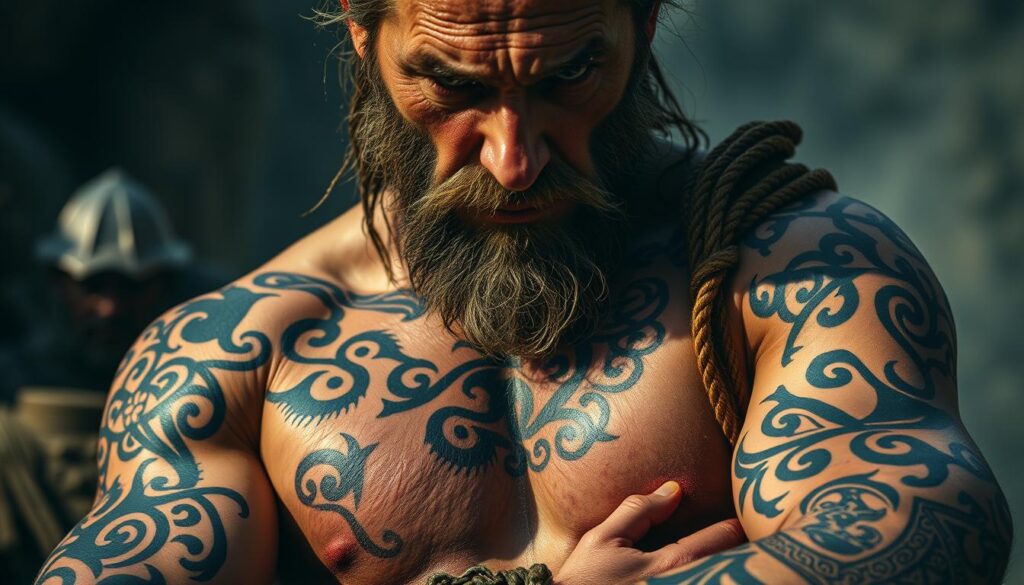
Imagine standing on a misty battlefield 3,000 years ago, facing warriors whose skin told stories of power and ancestry. This is where these iconic designs began—not as fashion statements, but as living armor for body and soul.
Ancient Celtic Culture and Traditions
Early tribes across Central Europe used body markings for more than decoration. Their Woad plant-based ink created vivid blue patterns believed to channel protective spirits. Warriors wore these symbols on their chests and arms, turning skin into a canvas of courage.
Roots in Ireland, Scotland, and Beyond
As these communities migrated west, their art evolved while keeping core beliefs intact. You can still see their influence strongest in regions like Ireland, where knotwork designs mirror the endless cycles of nature. The table below shows key cultural connections:
| Region | Cultural Influence | Modern Legacy |
|---|---|---|
| Ireland | Spiral patterns | Celtic Revival art |
| Scotland | Animal symbolism | Clan identity markers |
| Wales | Geometric knots | National pride symbols |
These traditions weren’t just about looking fierce—they connected wearers to their heritage and the unseen world. Today’s designs honor that history while letting you make them uniquely yours.
Understanding Celtic Symbolism
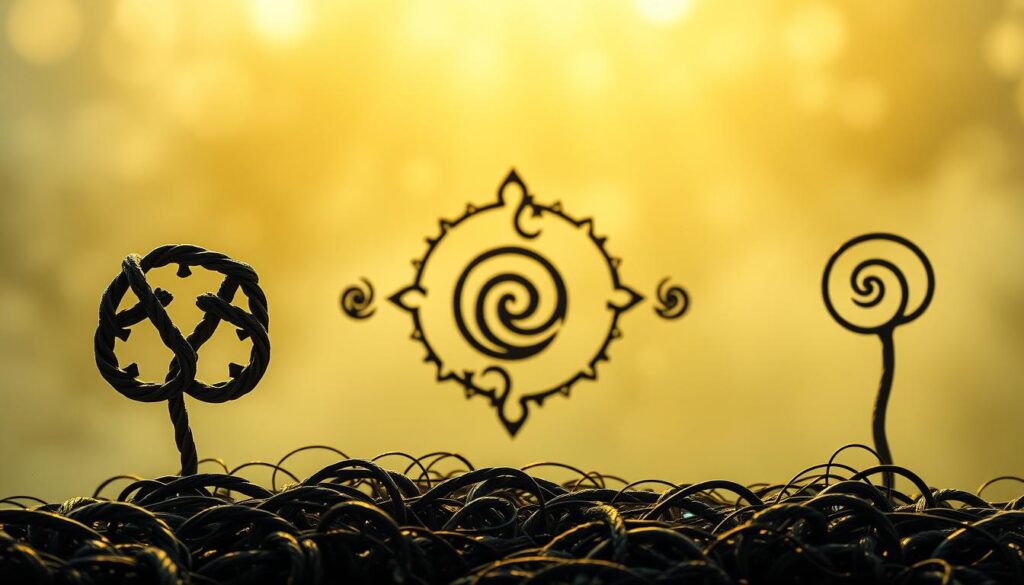
Peel back the layers of these ancient designs, and you’ll discover a language older than words. Every curve and twist holds secrets about existence itself—a code waiting to be deciphered on your skin.
The Meaning Behind Knotwork and Spirals
Those mesmerizing loops aren’t just pretty—they’re armor for the soul. Ancient artisans crafted these endless patterns believing they trapped protective energy within their threads. “Like a shield woven from ink,” one historian noted, “they guarded wearers from unseen dangers.”
Spirals tell their own stories. The oldest known symbol—dating to 3200 BC—might grace your forearm as a clockwise twist celebrating solar harmony. Flip it counterclockwise, and suddenly you’re channeling ancestral magic once used to bend nature’s rules.
Elements, Life, and Afterlife in Celtic Art
Five core elements pulse through these designs: water’s flow, air’s breath, earth’s steadiness, fire’s spark, and the space connecting them. Together, they mirror life’s balance—and what comes after.
Choose a spiral pointing outward? You’re shouting rebirth. A tightly wound knot? That’s eternal connection. These symbols don’t just decorate—they whisper about journeys between worlds, making your skin a map of beliefs older than stone circles.
Exploring Popular Tattoo Designs
Your skin becomes a living canvas when choosing symbols that bridge ancient wisdom with personal meaning. These patterns carry weight beyond their visual impact—they’re invitations to connect with stories etched through centuries.
Cross, Knotwork, and Sacred Trees
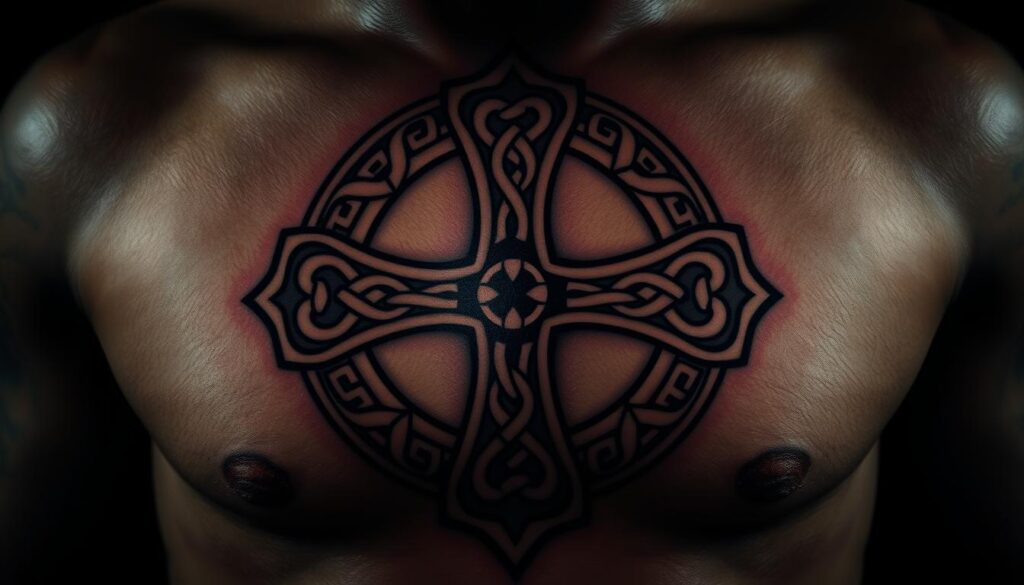
The Celtic cross merges spiritual devotion with artistic heritage. Its circular center represents eternal love, while the intersecting arms symbolize earthly and divine balance. One tattoo artist notes: “Clients often request crosses layered with knot patterns—it’s like wearing your faith and history in one design.”
For those drawn to timeless geometry, the Celtic knot offers endless possibilities. Its unbroken lines flow like rivers, capturing unity and life’s cyclical nature. Pair it with spirals or animal motifs to create a narrative unique to you.
| Design | Symbolism | Ideal Placement |
|---|---|---|
| Cross | Faith + Cosmic Balance | Chest or Upper Back |
| Knotwork | Eternal Connection | Forearm or Ankle |
| Tree of Life | Universal Harmony | Full Back or Sleeve |
Mythical Creatures and Warrior Symbols
Dragon art channels raw power and guardianship. Flames twist around scaled bodies in these designs, perfect for shoulder pieces that emphasize strength. Pair them with shield knots for added symbolic depth.
Animal motifs like wolves or stags connect you to ancestral hunting traditions. A roaring bear on your bicep isn’t just art—it’s a declaration of resilience. These elements shine when given space to breathe, making them ideal for larger canvas areas.
Celtic Tattoos for Men – Styles and Ideas
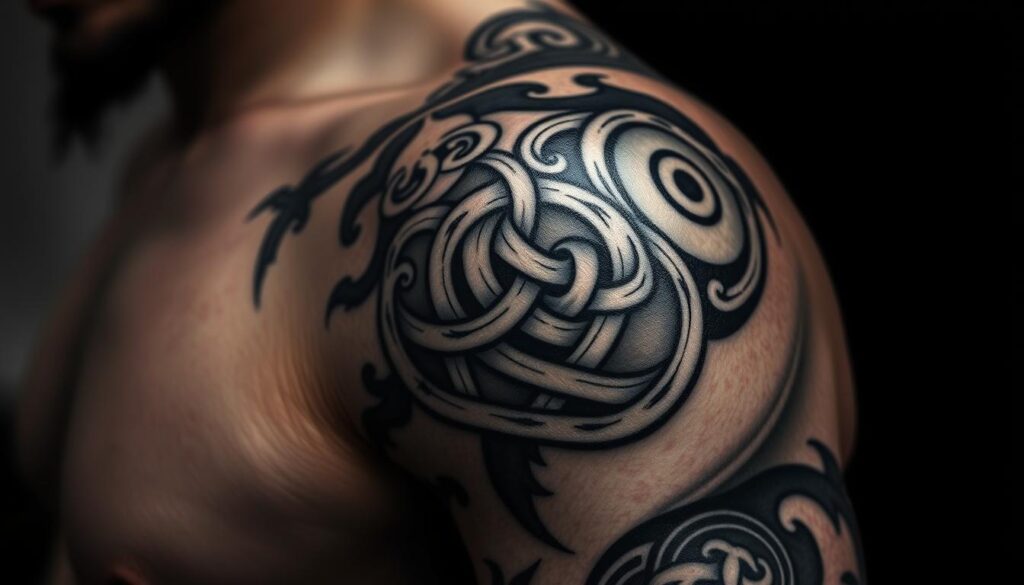
Modern ink enthusiasts are rediscovering how historical patterns can amplify personal style. These intricate creations blend ancestral wisdom with contemporary edge, offering endless ways to showcase strength and sophistication.
Bold, Detailed, and Regal Designs
Think of your skin as a canvas for storytelling. Elaborate knotwork or animal motifs across the chest create striking centerpieces, while smaller symbols on the forearm whisper quiet confidence. One artist explains: “Clients often layer geometric patterns with modern shading—it’s heritage reimagined.”
Popular placements include:
- Upper arms for circular knots that wrap like armor
- Full-back pieces depicting mythical creatures in motion
- Ribcage designs using negative space for dramatic contrast
| Style | Impact | Time Commitment |
|---|---|---|
| Minimalist knots | Subtle symbolism | 1-2 hours |
| Full-sleeve patterns | Museum-worthy art | 15+ hours |
| 3D animal designs | Visceral realism | 8-12 hours |
Historically, these symbols weren’t gendered—warriors of all identities wore them proudly. Today, you can choose elements that resonate with your journey. Pair traditional spirals with modern color gradients or keep it classic with blackwork that ages like fine wine.
Collaborate with artists who specialize in linework precision. Their needles can transform ancient geometry into body art that turns heads while honoring its roots. Whether you ink a single symbol or a tapestry of patterns, let each curve reflect your unique story.
Celtic Symbols: Definitions and Interpretations
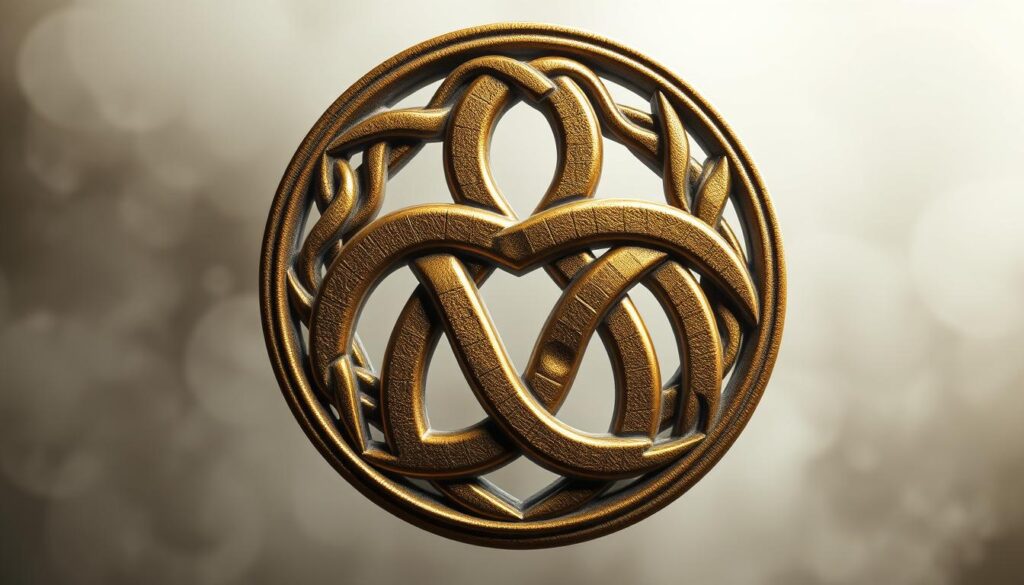
Geometric patterns whisper secrets older than written language when you explore their layered meanings. Among these designs, one stands out for its elegant simplicity and depth—a three-cornered shape that bridges spiritual realms.
Holy Trinity and Infinite Circles
The triquetra, or Trinity Knot, forms three interconnected arcs with no start or finish. This symbol originally represented life’s cyclical nature in ancient spirituality. Later, it gained Christian significance as a marker of the Father, Son, and Holy Spirit.
Your interpretation can adapt to personal beliefs:
- Eternal bonds: Family connections spanning generations
- Protection: Spiritual armor against negative forces
- Balance: Harmony between body, mind, and spirit
Modern wearers often pair the design with circles to emphasize infinity. A tattoo artist explains: “Clients love how the loops flow—like time itself looping around their wrist.”
| Aspect | Ancient Meaning | Modern Adaptation |
|---|---|---|
| Shape | Solar cycles | Personal growth journeys |
| Loops | Natural elements | Life milestones |
| Circle Frame | Cosmic unity | Community connections |
Whether inked small behind the ear or spanning your back, this symbol adapts to your story. Its endless lines remind you that every ending births new beginnings.
The Celtic Tree of Life and Its Deep Significance
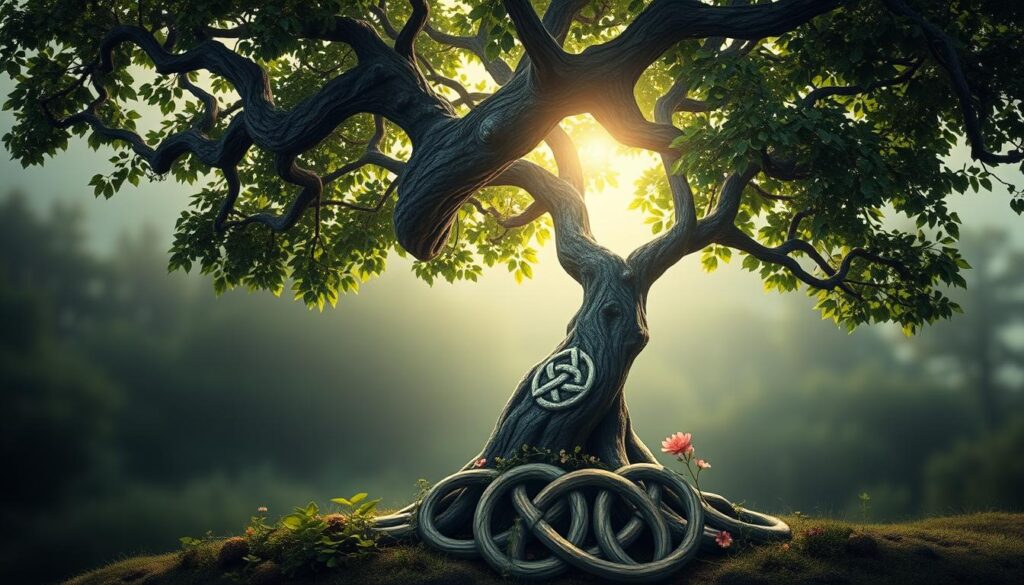
Standing tall across centuries, this iconic symbol bridges worlds—its roots digging into the earth while branches stretch toward the skies. The Tree of Life mirrors nature’s endless rhythm, where endings birth new beginnings. Its circular form isn’t just art—it’s a map of existence itself.
You’ll notice many designs pair the tree with a serpent, a nod to ancient symbolism. The creature represents flowing water, while the trunk embodies Mother Earth’s nurturing strength. Together, they whisper about balance—how life thrives when elements work in harmony.
Interwoven branches and roots tell their own story. Like family ties that span generations, these knots show how every choice ripples through time. A tattoo artist shared: “Clients often add names or dates within the roots—it turns heritage into wearable art.”
Modern takes range from minimalist outlines to detailed masterpieces. Larger placements like backs or sleeves let intricate patterns shine, while wrist-sized versions keep symbolism subtle. Whether you choose bold black ink or soft shading, the design adapts to your voice.
This symbol remains deeply cherished in Ireland, where it once guided seekers of wisdom. Today, it’s a reminder that growth requires both grounding and reaching—lessons etched not just in skin, but in spirit.
Modern Trends in Celtic Tattoo Art
Ancient symbols meet modern flair as today’s body art reimagines timeless motifs. Artists now blend historical patterns with fresh techniques, creating pieces that honor tradition while reflecting personal journeys.
Breathing New Life Into Old Patterns
Think geometric shapes layered over classic knots or watercolor accents softening rigid lines. One artist notes: “Clients love pairing spirals with minimalist elements—it’s like bridging centuries in one design.” These adaptations work beautifully alongside other cultural symbols, letting you weave multiple heritages into a cohesive story.
Your Story, Your Canvas
Customization turns ancestral emblems into intimate declarations. Add birthdates within tree roots or blend floral motifs with shield knots. For mixed backgrounds, try interlacing a family member’s initials with cherry blossoms or mandalas. The art becomes uniquely yours while keeping its soul intact.
Whether honoring roots or crafting new narratives, these innovations prove tradition thrives through reinvention. Your skin becomes a living gallery where history dances with tomorrow’s possibilities.